
A furniture workshop in Poland once returned an entire truckload of plywood because the delivery note called the panels “softwood plywood.” The panels were birch. The buyer’s assumption was simple: if a plywood sheet is light in color and easy to machine, it must come from a softwood tree. That assumption cost the supplier a week of production, a freight penalty, and a tense phone call. The truth is that birch plywood is a hardwood plywood, and the confusion comes from a naming system that has almost nothing to do with how hard the wood feels under a fingernail.
If you are specifying panels for cabinets, concrete formwork, laser-cut models, or shipping crates, this distinction matters. It affects customs codes, adhesive selection, structural calculations, and price negotiation. Below is a clear, practical explanation from a manufacturer that presses birch plywood every day.
Birch plywood is classified as a hardwood plywood. The reason is botanical, not commercial. Birch trees belong to the genus Betula and are deciduous, broad-leaved trees. In wood science, all deciduous, broad-leaved trees are called hardwoods, or angiosperms. Conifers such as pine, spruce, fir, and cedar are called softwoods, or gymnosperms. Because plywood takes its classification from the species used, any plywood made from birch veneers is a hardwood plywood.
This applies to every grade and construction method. Full birch core plywood? Hardwood. Birch face and back with a poplar core? Still a hardwood plywood because the faces are hardwood. Film-faced birch plywood? The film is a coating, not a wood species, so the panel remains a hardwood plywood. Even thin, flexible birch plywood used for model making falls into the hardwood category.
The term “hardwood” does not mean the sheet will resist a hammer blow like steel. It means the wood came from a tree that produces seeds inside a fruit or shell, drops its leaves in autumn, and has vessels in its cellular structure. Birch checks every box.
Most people hear “hardwood” and picture oak, maple, or walnut. They hear “softwood” and picture pine, spruce, or balsa. The mental shortcut works most of the time, but it fails often enough to cause real procurement mistakes. Balsa is a hardwood, yet it is softer than almost any softwood. Longleaf pine is a softwood, yet it is harder than many hardwoods. The Janka hardness test measures resistance to denting, and it cuts across the botanical divide.
Birch happens to be both a true hardwood and a genuinely hard wood. On the Janka scale, yellow birch scores around 1,260 lbf, while eastern white pine scores around 420 lbf. That means a birch plywood face is roughly three times more resistant to dents than a pine face of the same thickness. The classification and the performance agree in this case, but they agree by coincidence, not by definition.
When a supplier labels a panel “softwood plywood,” they usually mean the veneers came from a conifer. When a buyer asks whether birch plywood is softwood or hardwood, they often mean “will this panel dent easily?” The answer to both questions is different. Birch plywood is hardwood by species and hard by performance.
If you want to verify the classification yourself, look at the tree, not the panel. Birch trees have broad, flat leaves with serrated edges. They produce catkins, which are elongated clusters of flowers. The seeds are small, winged nuts. These are classic features of angiosperms, the flowering plants. Softwoods such as pine and spruce have needle-like leaves, produce cones, and bear naked seeds. Their wood contains tracheids for water transport, while hardwoods contain vessels.
Under a hand lens, a birch veneer shows fine pores or vessels scattered across the surface. A pine veneer shows a more uniform, resinous structure with distinct earlywood and latewood bands. This microscopic difference is why birch takes stain and finish differently from pine. It is also why birch plywood can be sanded to a very smooth surface without the fuzziness that sometimes appears on softwood veneers.
Plywood is an engineered panel made from thin layers of wood veneer, called plies, glued together with alternating grain directions. The species of those plies determines whether the final panel is a hardwood or softwood plywood. Manufacturers do not classify plywood by the adhesive, the film coating, the thickness, or the number of plies. They classify it by the wood.
A common misunderstanding arises with “combi” or “mixed” plywood, where the core is a softwood such as poplar and the faces are birch. In the trade, this is often sold as birch plywood because the visible faces are birch. Strictly speaking, it is a hardwood-faced plywood with a softwood core. For structural calculations, the core matters. For appearance and surface hardness, the face matters. Always ask for the full construction if the panel will carry load or be exposed to moisture.
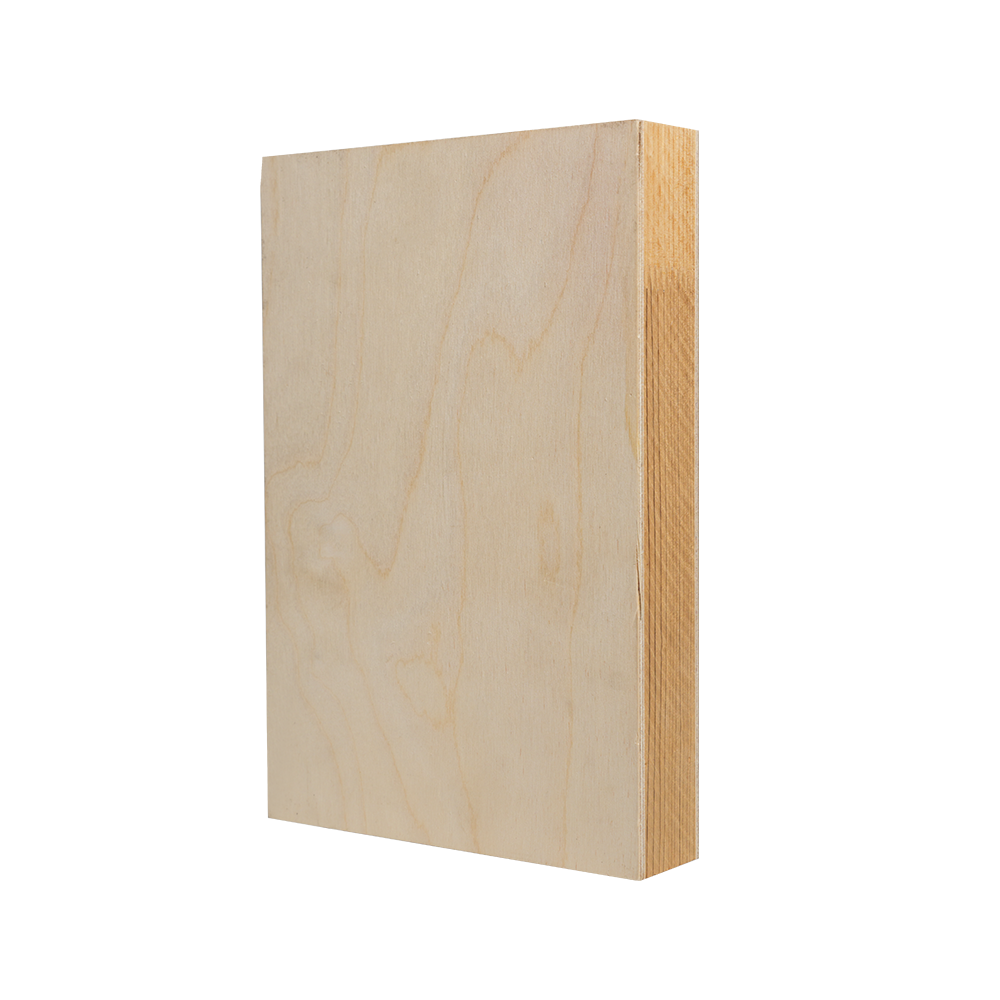
Full birch core plywood uses birch veneers throughout. This is the strongest and most dimensionally stable option. It is also the panel that most buyers mean when they ask about birch plywood. A detailed birch plywood guide can help you compare face grades, core types, and adhesive classes before you place an order.
One more layer of confusion: some suppliers use “hardwood plywood” as a marketing term for any decorative plywood, even if the core is softwood. In technical documents, always look for the species list. If the face and back are birch, the panel is a hardwood plywood in the decorative sense. If the entire cross-section is birch, it is a hardwood plywood in the structural sense as well.
The following table compares birch plywood with three common softwood plywoods on the properties that matter most in fabrication and construction. Values are typical ranges for dry panels at 12% moisture content. Actual results vary by grade, adhesive, and density.
| Property | Birch Plywood | Pine Plywood | Spruce Plywood | Fir Plywood |
|---|---|---|---|---|
| Botanical class | Hardwood | Softwood | Softwood | Softwood |
| Density (kg/m³) | 680–750 | 450–550 | 400–480 | 450–520 |
| Janka hardness (lbf) | 1,200–1,300 | 400–500 | 350–450 | 400–500 |
| Bending strength (N/mm²) | 90–120 | 50–70 | 45–65 | 50–70 |
| Dimensional stability | Excellent | Moderate | Moderate | Moderate |
| Typical use | Furniture, cabinets, formwork, laser cutting | Sheathing, crates, general building | Construction, packaging | Construction, industrial |
The table shows why birch plywood commands a higher price. It is not just a different classification. It is a denser, harder, stronger panel. That difference translates into fewer dents during assembly, better screw-holding capacity, and a longer service life in high-traffic furniture.
Numbers make the distinction concrete. The chart below compares the relative hardness of birch, oak, pine, and spruce. Birch sits well above the softwoods and close to oak, which is a traditional benchmark for hard, durable furniture wood.
Density tells a similar story. Birch plywood typically weighs 680–750 kg/m³. Pine plywood usually falls between 450 and 550 kg/m³. If you are calculating freight costs or designing a mobile installation, this weight difference is significant. A 20 mm birch plywood sheet measuring 1,220 mm by 2,440 mm weighs roughly 42 kg. The same sheet in pine weighs about 30 kg. The birch panel is heavier, but it also resists deflection better under the same load.
Bending strength, or modulus of rupture, is where birch plywood excels. A 12 mm birch plywood panel can span further than a pine panel of the same thickness before sagging. That is why cabinet shelves made from birch plywood can be wider without a center support. It is also why birch plywood is preferred for long, unsupported table tops and retail display units.
In furniture and cabinetry, the hardwood classification of birch plywood is not just a label. It affects how the panel machines, finishes, and holds hardware. Birch plywood takes paint and clear coat evenly because its grain is tight and uniform. It resists screw pull-out better than softwood plywood, which means cabinet hinges and drawer slides stay tight after years of daily use. It also sands to a smooth edge that can be painted or banded without tear-out.
For kitchen cabinets, the combination of hardness and dimensional stability is hard to beat. A birch plywood cabinet box will not warp in a steamy kitchen the way a low-density softwood panel might. It also holds its shape when loaded with heavy dishes. For furniture makers, birch plywood is often the substrate of choice for veneered panels because it provides a flat, stable base that does not telegraph grain or knots through the veneer.
If you are producing high-end furniture, the top grades of birch plywood offer a clean, uniform face that accepts stain and lacquer with minimal preparation. Lower grades are still hardwood, but they may contain patches or color variations that are best suited for hidden parts or painted surfaces.
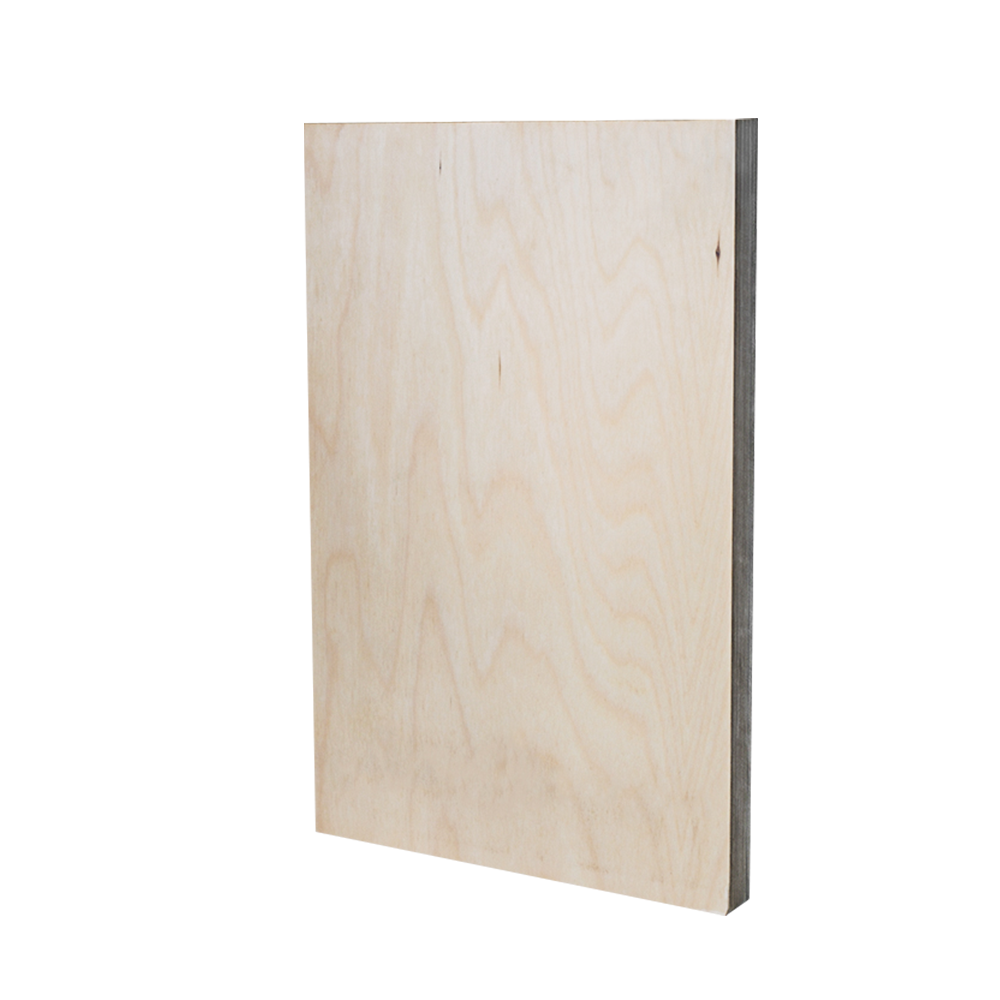
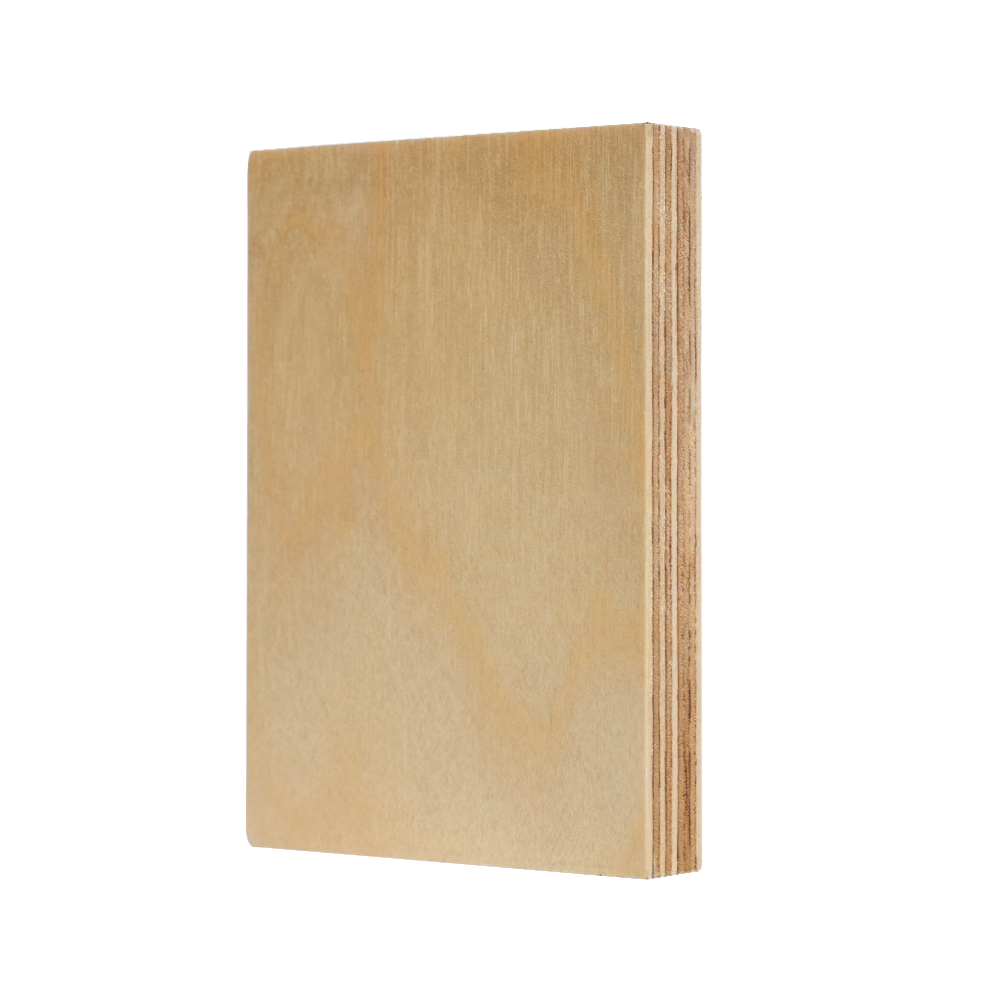 Top Grades Birch Plywood(B/BB & S/BB)In addition to the impressive strength and stability of Top Grades Birch Plywood (B/BB, S/BB), the natural beauty of the birch and attractive grain pattern make it a s...View Product →
For visible surfaces, B-BB and S-BB grades are common choices. They provide a smooth, consistent birch face while keeping the structural benefits of a hardwood core. Projects that need a specific color or grain pattern can be matched with veneered birch plywood, where a thin layer of oak, walnut, or another decorative species is applied over the birch substrate.
Construction sites are hard on panels. Formwork is stripped, cleaned, and reused. Scaffolding decks take repeated foot traffic and dropped tools. Concrete shuttering panels need to resist moisture, abrasion, and impact without delaminating. Birch plywood, especially when finished with a phenolic film, performs well in these conditions because the dense hardwood core holds screws and bolts securely and resists crushing at the edges.
Film-faced birch plywood is a hardwood plywood with a resin-impregnated overlay. The film is not a wood species, so the panel remains a hardwood product. The overlay adds water resistance, wear resistance, and a smooth concrete finish. A yellow shuttering panel made with a birch core can be reused many times, which lowers the cost per pour. Softwood formwork panels often need thicker sections to achieve the same stiffness, and they tend to dent more easily at the edges.
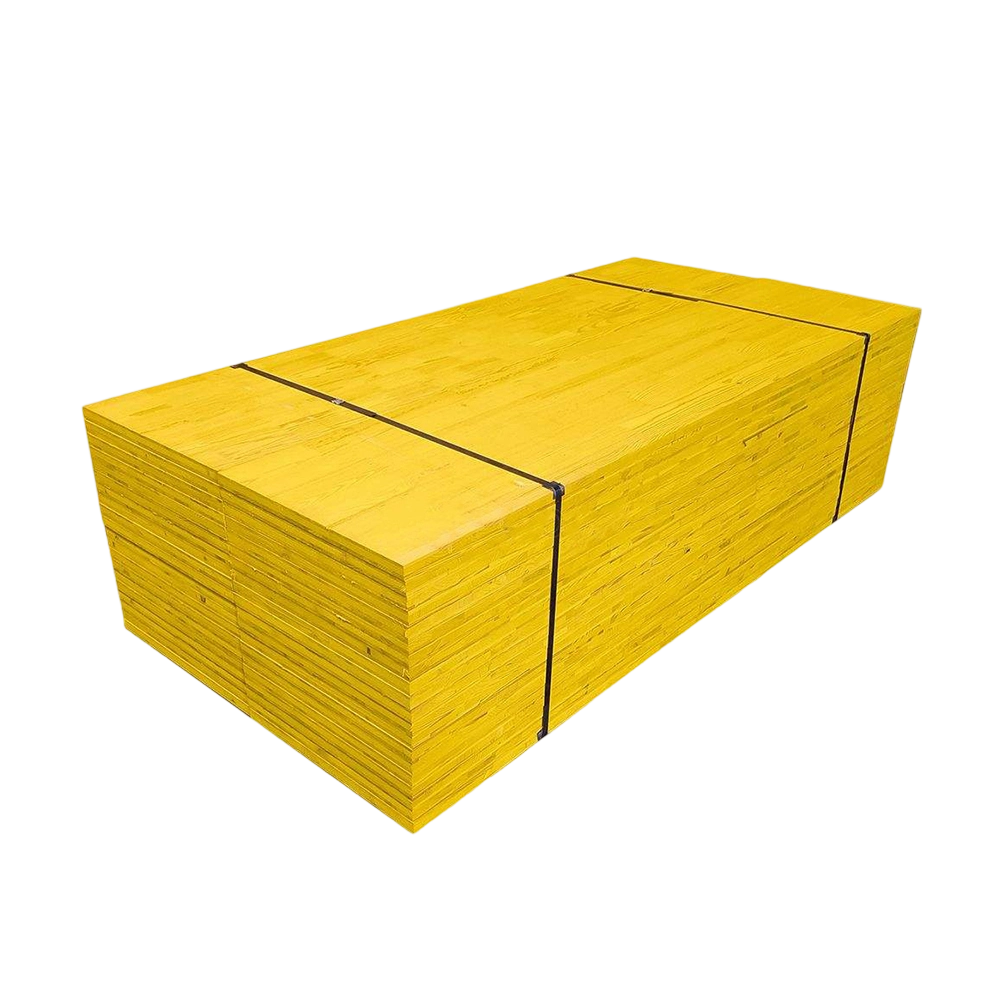 Yellow Shuttering PanelCore Materials: Finland Spruce Chinese Fir (dual-species construction). Key Features:View Product →
Structural applications also benefit from birch plywood’s consistent density. When an engineer calculates load-bearing capacity, variability is the enemy. Softwood plywood can vary widely in density and stiffness, even within the same shipment. Birch plywood from a controlled manufacturing process is more predictable, which allows for tighter safety margins and more efficient designs. For heavy-duty industrial flooring, mezzanine decks, and vehicle bodies, birch plywood is often the panel that meets the specification without excess weight.
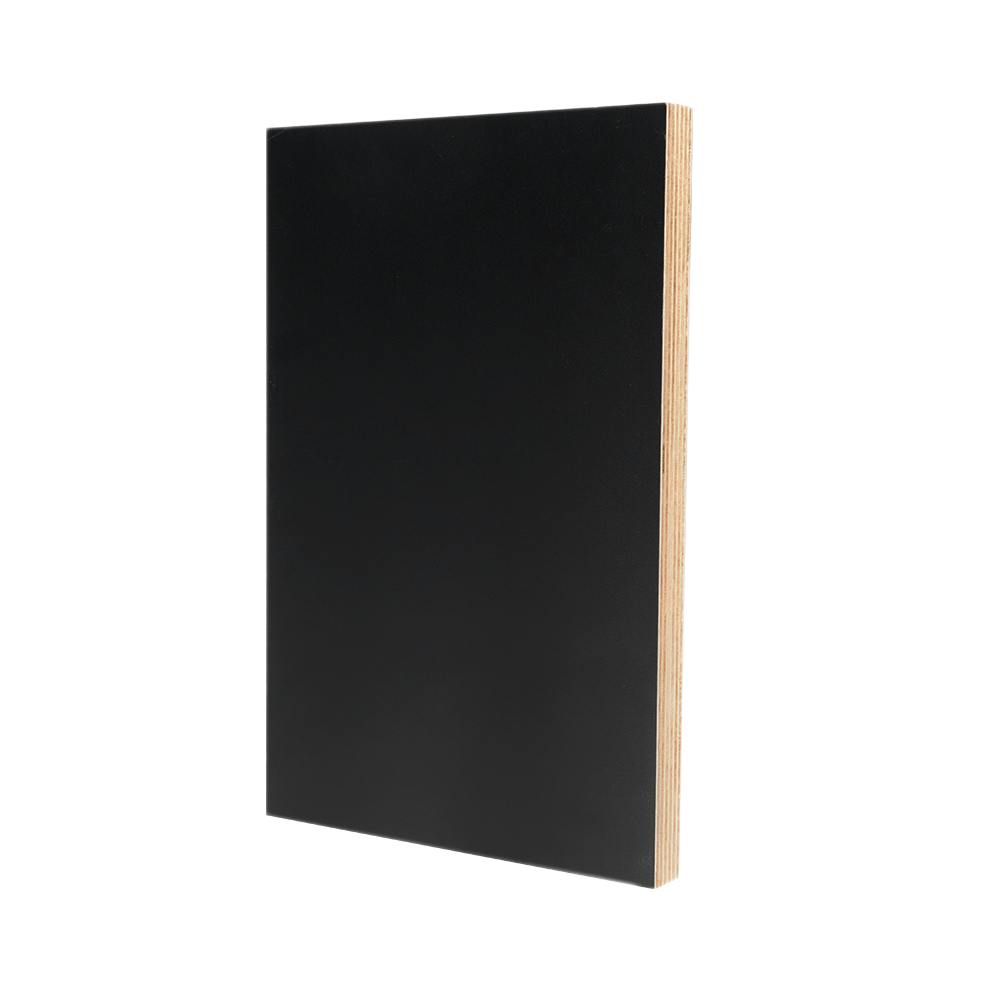
Specialty panels sometimes confuse buyers because the surface looks synthetic. A film-faced panel with a black or brown resin overlay does not look like wood. A ClearPly panel with a transparent coating looks like glass over a wood grain. A melamine-faced panel looks like a laminate. In every case, if the veneers underneath are birch, the panel is a hardwood plywood. The coating changes performance, not classification.
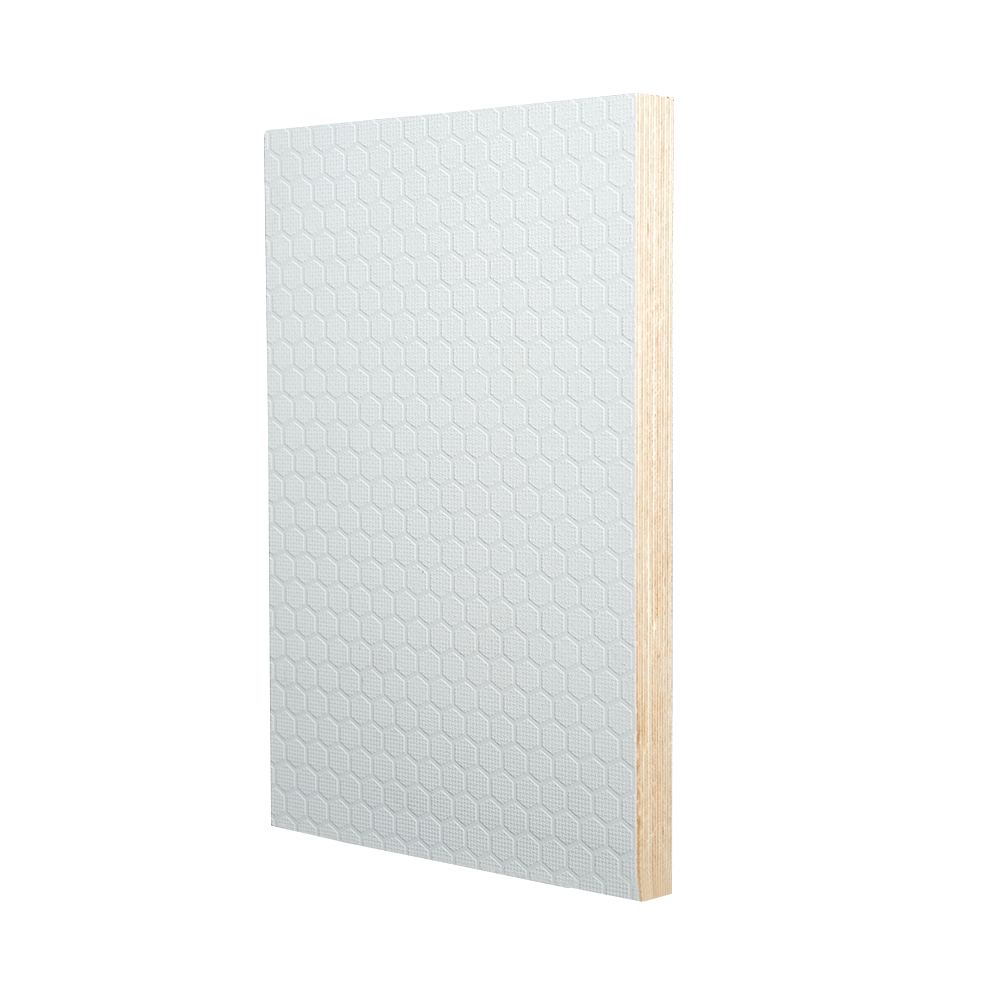
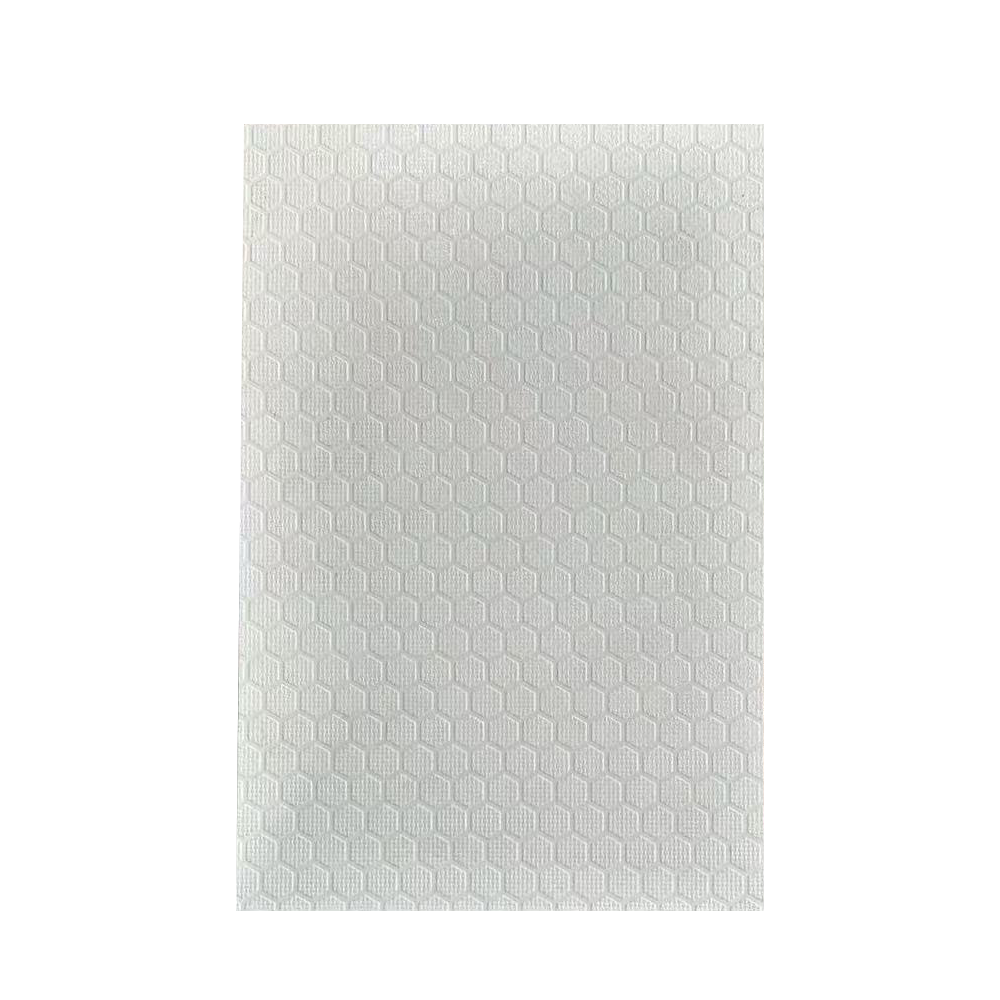
Anti-slip film-faced birch plywood is a good example. The surface has a raised hexagonal or wire-mesh pattern for traction. It is used on scaffolding decks, truck floors, ramps, and industrial platforms. The core is birch, so the panel is strong, hard, and resistant to screw pull-out. The anti-slip surface adds safety without changing the fact that the panel is a hardwood product.
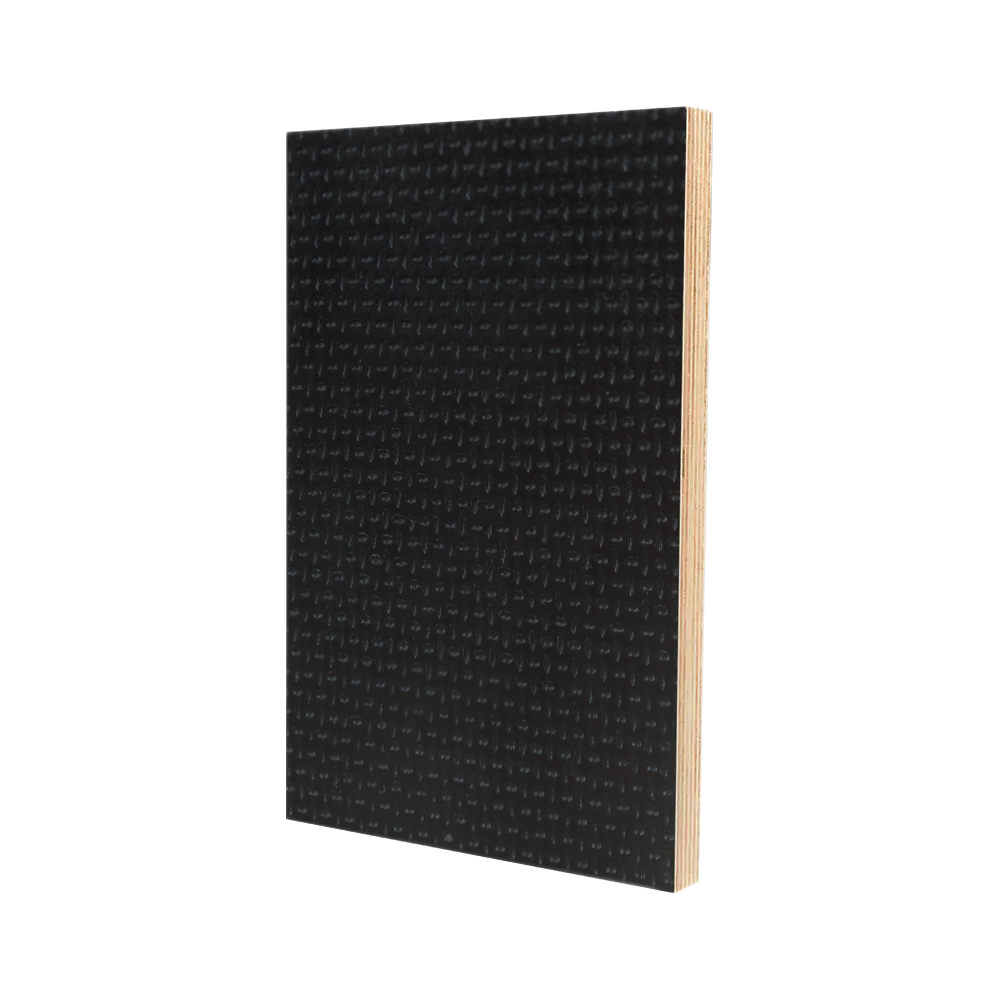 Anti-slip Film-Faced Birch PlywoodAnti-slip Film-Faced Birch Plywood uses 99.99% birch as core material, and the surface is specially treated and attached with Dynea professional anti-slip film, which ...View Product →
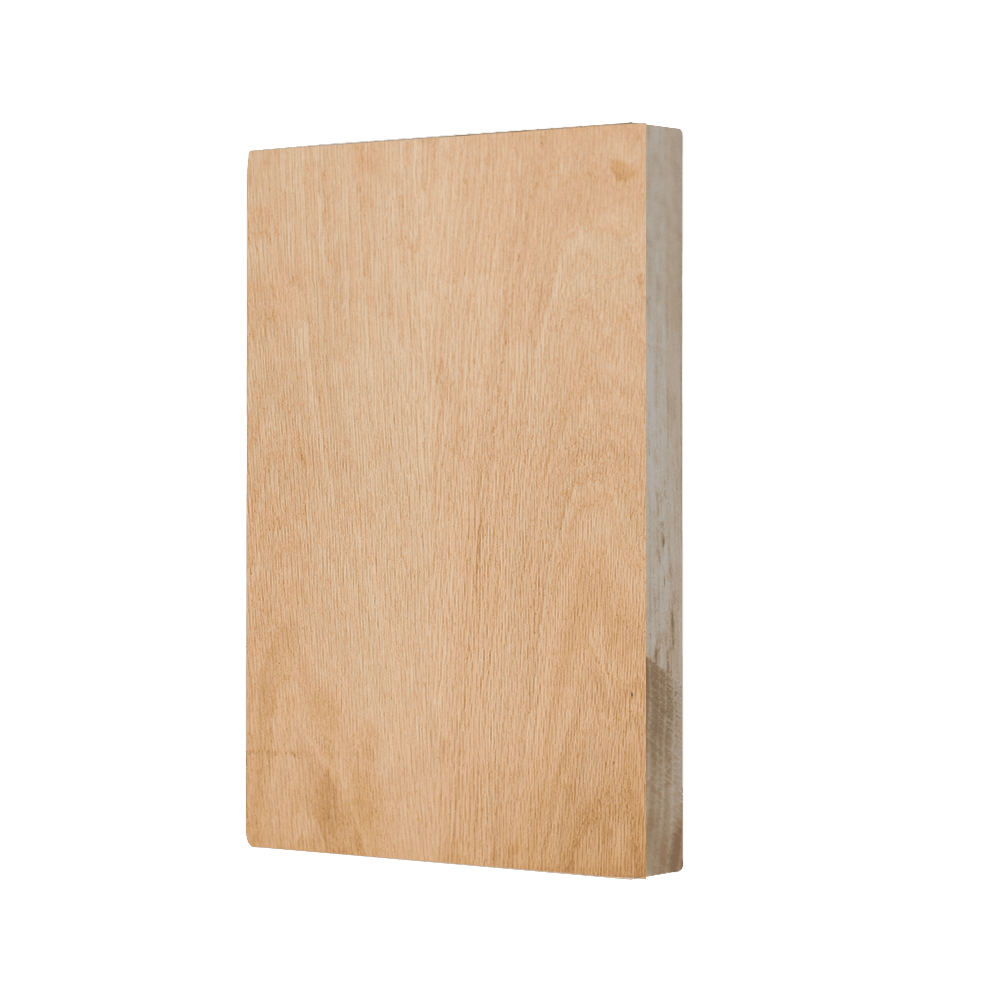
ClearPly and veneered birch plywood serve interior designers who want the stability of birch with a specific visual effect. A transparent film allows the natural birch grain to show through while protecting the surface from moisture and wear. A wood-veneered panel can match oak, walnut, or teak without the cost and movement of solid wood. In all these products, the birch core provides the structural backbone.
For laser cutting and model making, thin birch plywood is popular because it cuts cleanly and holds fine detail. The hardwood classification means the edges are less likely to crush or fuzz during cutting. It also takes paint and glue well, which is important for architectural models and prototype parts.
When you request a quote, use specific language. Ask for the species of the face, back, and core. Ask for the grade, the adhesive type, and the thickness tolerance. The following checklist will help you avoid a mislabeled shipment.
It also helps to know the difference between “Russian birch plywood” and birch plywood from other regions. For example, B-BB grade Russian birch plywood is known for tight grain and high density, but the classification is the same: hardwood. The grade and origin affect appearance and price, not the hardwood/softwood category.
Yes, in most structural and surface-hardness measures. Birch plywood has higher density, higher Janka hardness, and higher bending strength than pine plywood. It also holds screws better and resists edge crushing more effectively. The trade-off is higher weight and higher cost.
Yes, if it is made with a suitable exterior adhesive such as WBP or phenolic resin. The wood itself is not naturally rot-resistant, so the panel must be protected with a film coating, paint, or sealer. Film-faced birch plywood is a common choice for exterior concrete formwork and transport flooring.
Yes. The film is a resin-impregnated paper overlay. The wood underneath is birch, which is a hardwood species. The classification follows the wood, not the coating.
Baltic birch plywood is a type of birch plywood produced in the Baltic region. It typically uses full birch cores and is known for tight tolerances and void-free construction. Both are hardwood plywood. The difference is in manufacturing standards and origin, not botanical class.
Not always. Some panels have hardwood faces and softwood cores. If you need full hardwood construction, specify “full birch core” or “all-birch plywood.” If only the faces are hardwood, the panel is still sold as hardwood-faced plywood, but the core may be poplar or another softwood.
It is usually a mistake. The supplier may be using “softwood” as a generic term for light-colored plywood, or they may have mislabeled the shipment. In technical documents, birch is always a hardwood. If a supplier insists on calling it softwood, ask for the botanical species and the full construction in writing.
Birch plywood is generally better for laser cutting because its density and grain structure produce cleaner edges with less charring. Poplar is softer and may cut faster, but it can leave a fuzzier edge. For fine models and detailed parts, birch is the preferred hardwood option.
Understanding the hardwood/softwood classification of birch plywood is more than an academic exercise. It helps you write accurate purchase orders, choose the right adhesive, estimate weight and freight, and predict how a panel will perform after years of use. Birch is a deciduous, broad-leaved tree, so birch plywood is a hardwood plywood. The fact that it is also genuinely hard, dense, and strong makes it one of the most versatile engineered wood products available.
If you are planning a furniture line, a formwork system, or a specialty panel order, talk to a manufacturer who works with birch every day. Ask for the species breakdown, the grade, and the adhesive class. A clear answer at the quotation stage prevents a costly surprise at the job site.


Copyright © Tianma Lvjian Group Co., Ltd. Rights Reserved.
Wholesale Construction Plywood Manufacturers Privacy
 English
 中文简体
中文简体