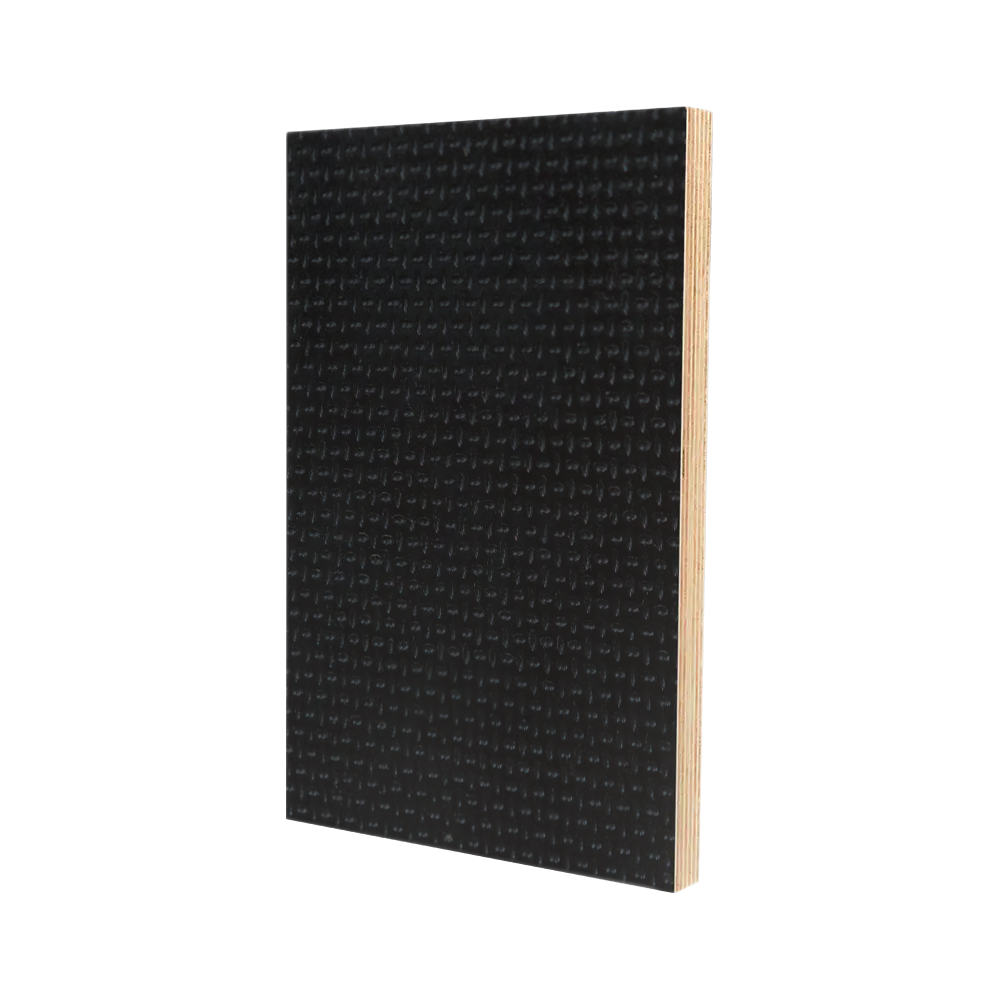

An 18 mm film faced birch plywood panel with 220 g/m² phenolic film on both faces and properly sealed edges will normally deliver 18 to 25 concrete pours before the surface stops producing acceptable concrete. The same panel used with unsealed edges, an over-applied solvent release agent and uneven stacking usually fails before the eighth pour. That gap of roughly three times the service life sits almost entirely in specification and handling, not in luck.
This matters because the purchase price of a formwork panel tells you very little. What a project actually pays is the panel cost divided by the number of acceptable pours, plus the labour spent cleaning, patching and replacing it. A panel at a low unit price that gives six pours is frequently more expensive than a heavier panel that gives twenty-two.
Three specification points decide most of that outcome before the panel ever reaches site: film weight and resin chemistry, the glue line and core build, and the condition of the four edges. Everything after that is care routine, and care routine is where most losses hide.
Budget planning should start from a range, not a single figure, because reuse count is a function of concrete mix, pour height, vibration intensity, stripping method and weather. The table below reflects ordinary commercial construction conditions: standard slump concrete, mechanical vibration, panels stripped by pry bar rather than dropped, and a cleaning routine carried out on the same shift as stripping.
| Panel configuration | Film weight | Thickness | Typical reuse range | Concrete finish expectation |
|---|---|---|---|---|
| Full birch core, phenolic film, sealed edges | 220 g/m² both faces | 18 mm | 20 to 26 pours | Fair-faced / architectural finish throughout |
| Full birch core, phenolic film, sealed edges | 180 g/m² both faces | 18 mm | 15 to 19 pours | Good commercial finish, later pours show light texture |
| Birch core with mixed inner plies, 120 g film | 120 g/m² both faces | 18 mm | 9 to 14 pours | Standard finish, patching needed after pour ten |
| Poplar or mixed hardwood core, light film | 90 to 120 g/m² | 15 to 18 mm | 4 to 7 pours | Utility work, hidden surfaces |
| Any core, unsealed edges | Any | Any | 40 to 60 percent lower than the same panel sealed | Edge swelling visible from pour five onward |
| Heavy scaffold shuttering board, high-density core | 240 g/m² or above | 21 mm | 25 to 35 pours | Fair-faced plus high load cycles |
Read those ranges as a planning envelope rather than a warranty. A contractor pouring 3 m walls with a stiff mix and 45-minute vibration windows will sit at the bottom of each band. A contractor pouring repetitive 2.7 m walls with a well-controlled mix and a dedicated cleaning crew will sit at the top.
Five variables explain almost all of the spread. Two are locked in at the factory, three are decided on site, and the site variables are the cheaper ones to fix.
Film weight is the single most predictive factory variable. A 220 g/m² phenolic film carries roughly twice the resin mass of a 120 g/m² overlay, and that extra mass is what absorbs abrasion from aggregate at the concrete face. Phenolic resin also resists alkali attack from fresh cement paste far better than melamine-based overlays, which is why phenolic dominates external and heavy-duty formwork while melamine films migrate toward interior precast or low-alkali applications.
Film quality is not only about weight. A film that has been hot-pressed onto a well-calibrated, densely sanded face bonds without micro-voids. Voids become the starting point for delamination: water enters under the film at a damaged spot, the film lifts, and the panel produces a rough patch from that pour onward. Inspecting a sample panel for edge-to-edge film adhesion before ordering in volume is a ten-minute check that prevents a season of complaints.
A full birch core with phenol-formaldehyde (WBP) adhesive holds its thickness under repeated wetting and drying. A mixed core with interior-grade glue lines will delaminate from the inside out, and the failure is invisible until the panel suddenly cups after the twelfth pour. For formwork, the glue line should be specified as phenolic or WBP, never interior grade, because the panel faces saturated concrete and is washed between cycles.
Core density matters too. Higher density birch plies resist compression under fresh concrete pressure and hold the film flatter. On tall pours where hydrostatic pressure at the base is significant, a low-density core deflects more, the film stretches slightly, and the concrete surface shows a subtle waviness that no amount of cleaning will remove.
Thickness affects reuse indirectly but strongly. An 18 mm panel spanning between 300 mm joists deflects less than a 15 mm panel, so the film is not flexed at every pour. Repeated flexing fatigues the bond line and speeds edge deterioration. For high walls or where joist spacing exceeds 300 mm, moving to 21 mm is usually cheaper than accepting a shorter life and more frequent resurfacing work.
Edges are where most panels die. An unsealed edge wicks water into the core within a single pour; the plies swell, the film lifts back from the edge, and the panel starts chipping. Factory-applied edge sealant, water-based acrylic coating or a proper two-coat site-applied sealer all extend life significantly. As a working rule, seal every cut edge and re-seal any edge that shows bare timber after stripping.
Two crews can use identical panels and get eleven and twenty-two pours respectively. The difference is stripping technique, cleaning timing and stacking discipline. Dropping a panel from a wall onto rubble, dragging it across a slab, or prying directly against the film face introduces damage that accumulates pour by pour. Handled flat, lifted rather than dragged, and stacked face to face with spacers, the same panel survives twice as long.
The chart below compares expected pour counts for five common configurations, using the top-performing specification as the reference index. The two worst performers differ from the best by a factor of nearly five, which is why specification meetings should settle the film and edge question before the price question.
Note that the drop from the second to the third bar comes from core and film specification, while the drop from the third to the fourth bar comes from edge sealing alone. Same panel, same concrete, roughly five pours lost to one routinely skipped step.
Care is not a weekly maintenance task. It is a set of actions performed inside the first three hours after stripping, and those actions determine whether the next pour starts from a clean, flat, sealed surface or a compromised one.
Concrete residue hardens quickly, and a film surface cleaned 24 hours later needs a scraper rather than a nylon brush. Scraping is where most accidental film damage happens. Aim to strip, clean and stack on the same shift.
More panels are ruined by the wrong release agent or by too much of the right one than by concrete abrasion. A thin, continuous film is the target. Pools of release agent trap air and water, produce surface blemishes, and soften the film over time. Solvent-based products applied heavily can swell the film edge and penetrate behind it, so a water-based emulsion or a reactive chemical release agent is usually the safer choice for phenolic films.
Apply in a light mist from roughly 300 mm, then wipe or allow to dry fully before placing reinforcement. Never apply release agent to a wet panel, and never allow it to run down the edges.
Edges deserve their own inspection step. After each pour, check the four edges for film lifting, chipped corners or visible fibre swelling. Small lifts can be trimmed back and re-sealed with a compatible coating; large lifts mean the panel is moved to a lower-demand location or retired. Carrying a small tin of edge sealer in the site toolbox pays for itself within a week.
Storage quality is often overlooked because it happens between cycles rather than during them.
Phenolic film tolerates heat, but not repeatedly. Steam curing chambers, hot summer slabs and enclosed formwork all raise film temperature and reduce flexibility. Where steam curing is specified, shorten the cycle, allow cooling before stripping, and re-seal edges more frequently. In cold weather, avoid stripping panels while the concrete surface is still at a high temperature differential, because the film can craze as the panel cools rapidly.
The release agent choice interacts directly with film life. The comparison below reflects common site practice rather than laboratory conditions.
| Release agent type | Typical dilution | Effect on film life | Best suited to |
|---|---|---|---|
| Water-based emulsion | 1:5 to 1:10 with water | Neutral; keeps film flexible and clean | Vertical walls, fair-faced work, most projects |
| Reactive chemical agent | Ready to use, thin coat | Neutral to positive; minimal residue build-up | High reuse targets, architectural concrete |
| Neat oil | Undiluted | Slight negative; attracts dust and builds residue | Utility pours with low finish requirements |
| Solvent-based agent | Ready to use | Negative if over-applied; softens film edges | Cold weather work only, with careful dosing |
| Wax-based agent | Ready to use | Negative on film; builds a layer that dulls the face | Timber forms rather than film faced panels |
| No agent at all | Not applicable | Strongly negative; film tears during stripping | Never appropriate for phenolic film |
One practical detail: residue from any release agent accumulates in the film micro-texture and gradually dulls the concrete finish. A periodic deep clean with a mild alkaline cleaner, followed by a thorough rinse and full drying, restores the surface and is usually worth doing every eight to ten pours.
Deciding when to stop using a panel prevents two expensive mistakes: scrapping a usable panel, and running a failing panel until it produces a rejected wall. Use measurable criteria rather than a general impression.
| Indicator | Acceptable condition | Watch condition | Retire the panel |
|---|---|---|---|
| Film damage area | Under 2 percent of face | 2 to 5 percent, patchable | Over 5 percent or any exposed core |
| Edge swelling | None visible | Under 3 mm local swelling | Over 3 mm or delamination along the edge |
| Surface flatness | Under 2 mm per metre | 2 to 5 mm per metre | Over 5 mm per metre, or visible cupping |
| Thickness change | Within 0.5 mm of nominal | 0.5 to 1 mm | Over 1 mm, or thickness varies across the face |
| Concrete finish | Consistent, no patching required | Occasional light grinding | Repeat rework or formwork marks that show through coatings |
| Tie hole condition | Sealed and tight | Sealant worn but intact | Enlarged or crushed holes that leak paste |
Where a project needs a uniform architectural finish, retire panels earlier than these limits and relegate them to non-exposed pours. Mixing a worn panel into a wall that will be seen is the most common cause of patchy colour and texture on fair-faced concrete.
A worked example makes the specification decision concrete. Take a project with 40 pours of wall formwork on a 300 m² face.
The light panel looks cheaper per sheet. Once the set count, the labour to replace failing panels mid-cycle, the cleaning time and the finishing rework are added, the heavier panel usually wins by a wide margin on cost per square metre of finished concrete. The same logic applies to accessories: a shuttering board used with a properly sized timber beam and correct spacing lasts longer than one overloaded between widely spaced supports.
Run this calculation before the tender, not after. The number that matters is cost per acceptable pour, and it can be estimated within about ten percent from film weight, core type and the edge sealing policy alone.
Different parts of a project justify different specifications. A core wall that will be seen needs a high-cycle panel with a smooth face; a hidden foundation pour can absorb the panels retired from the wall cycle. The panels below cover the three most common positions in a concrete formwork programme.
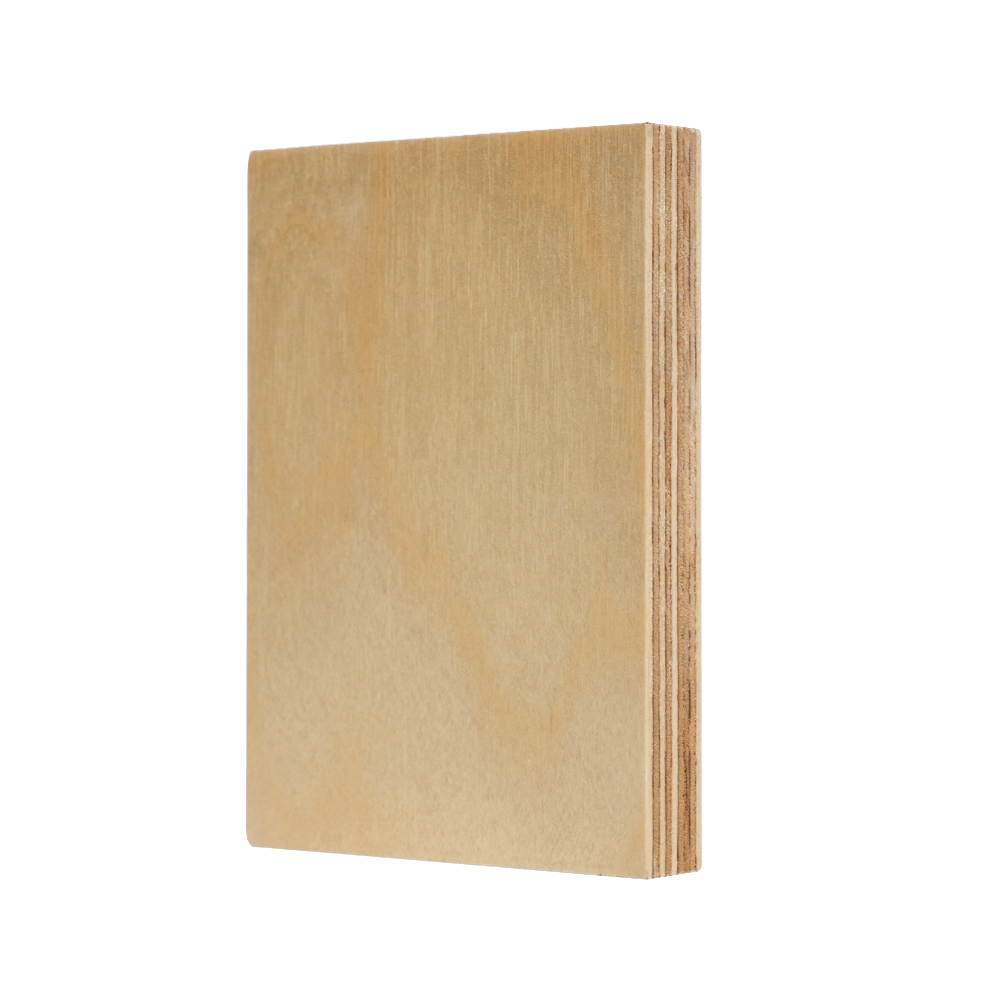
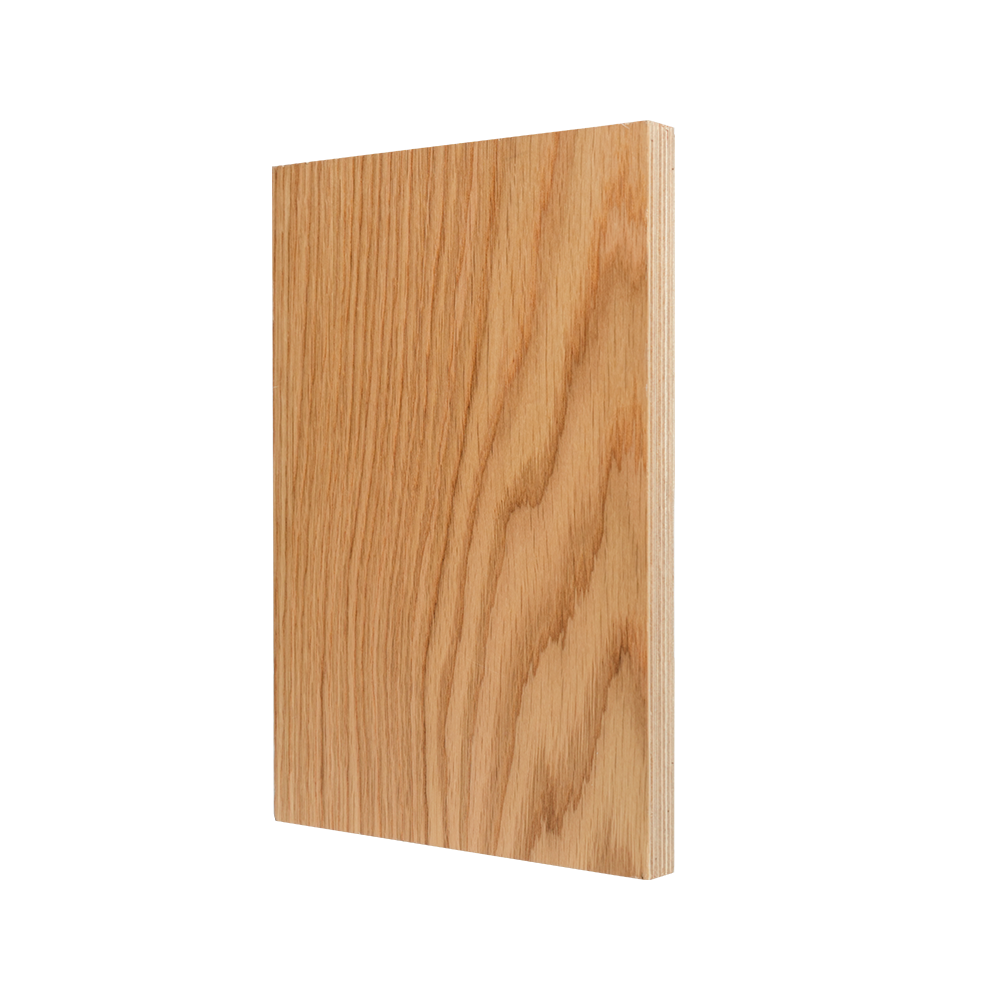
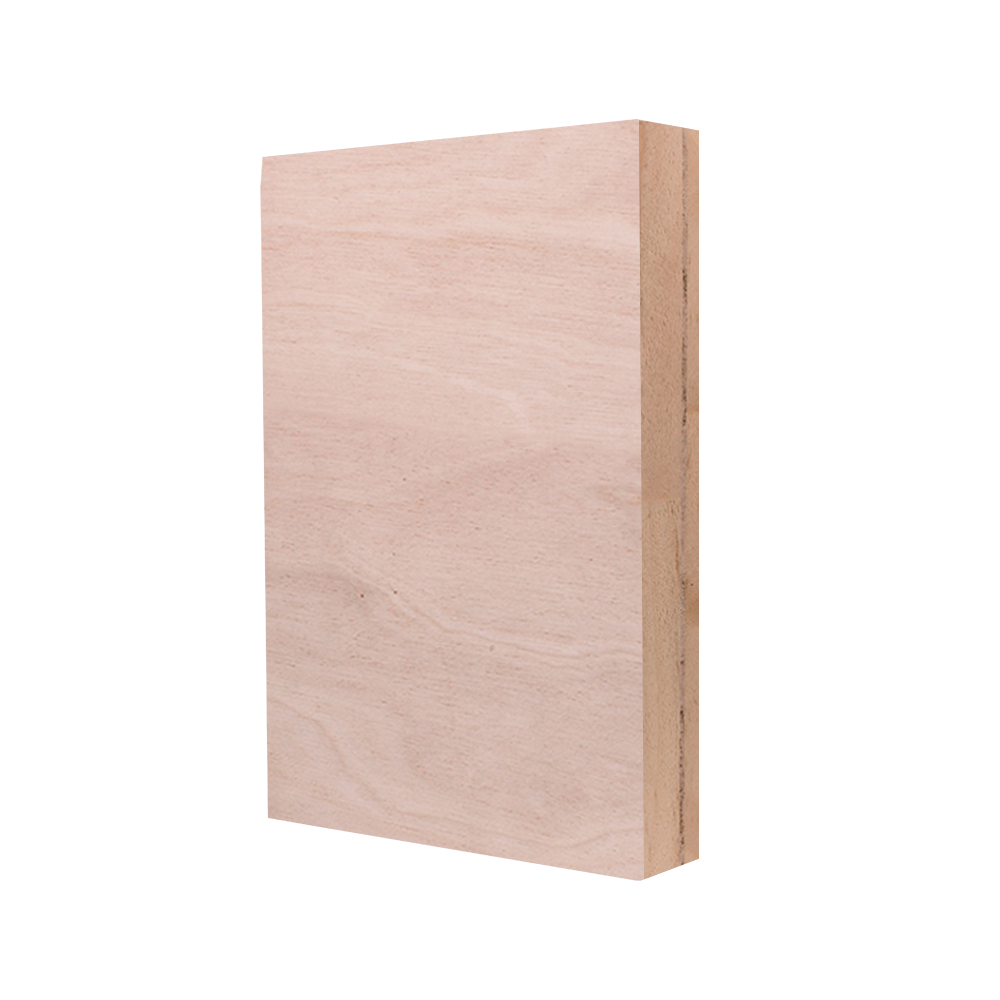
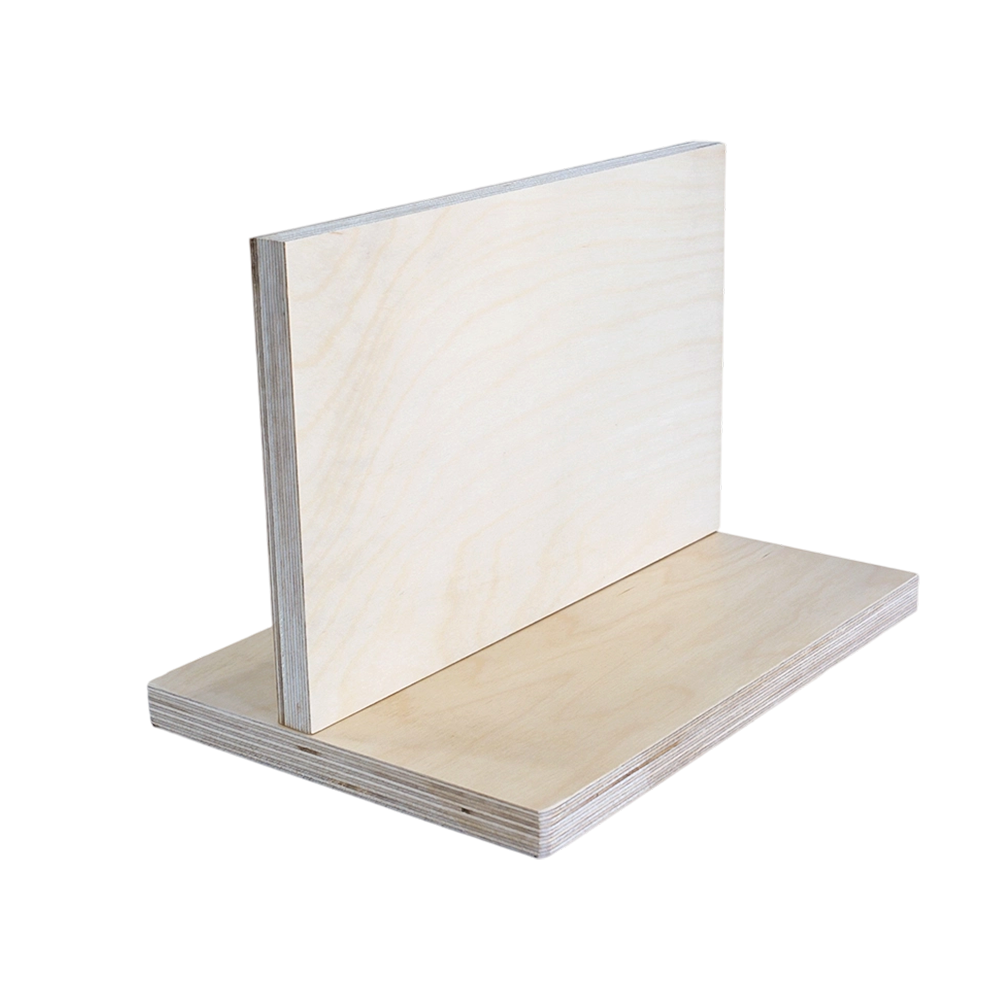
For exposed walls and architectural concrete, a smooth film faced panel with a heavy phenolic overlay keeps the face flat and the film intact for the upper end of the reuse range. Film flatness and consistent resin coverage matter more here than raw thickness, because any surface irregularity is transferred directly to the concrete.
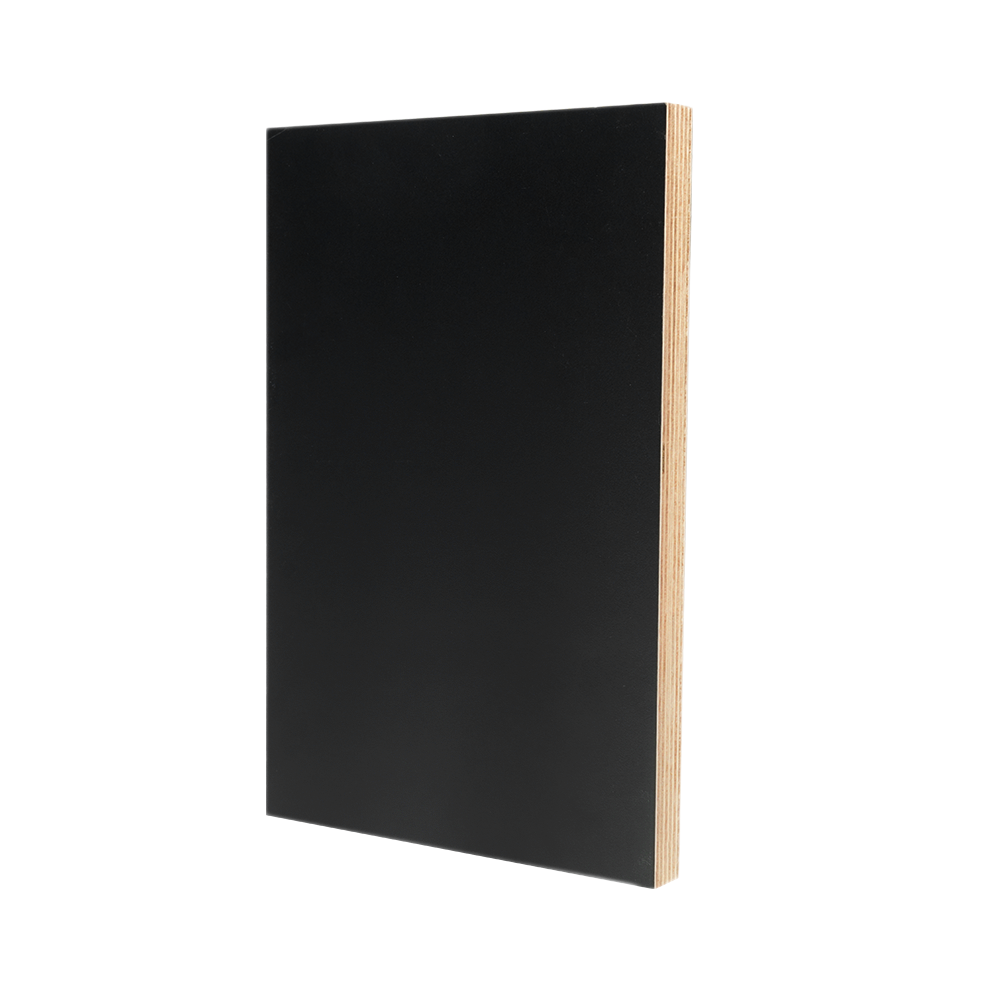 Smooth Film-Faced Birch Plywood for Architectural FormworkFor exposed concrete faces, its smooth phenolic film and birch core support flat, repeatable formwork results across demanding pours.View Product →
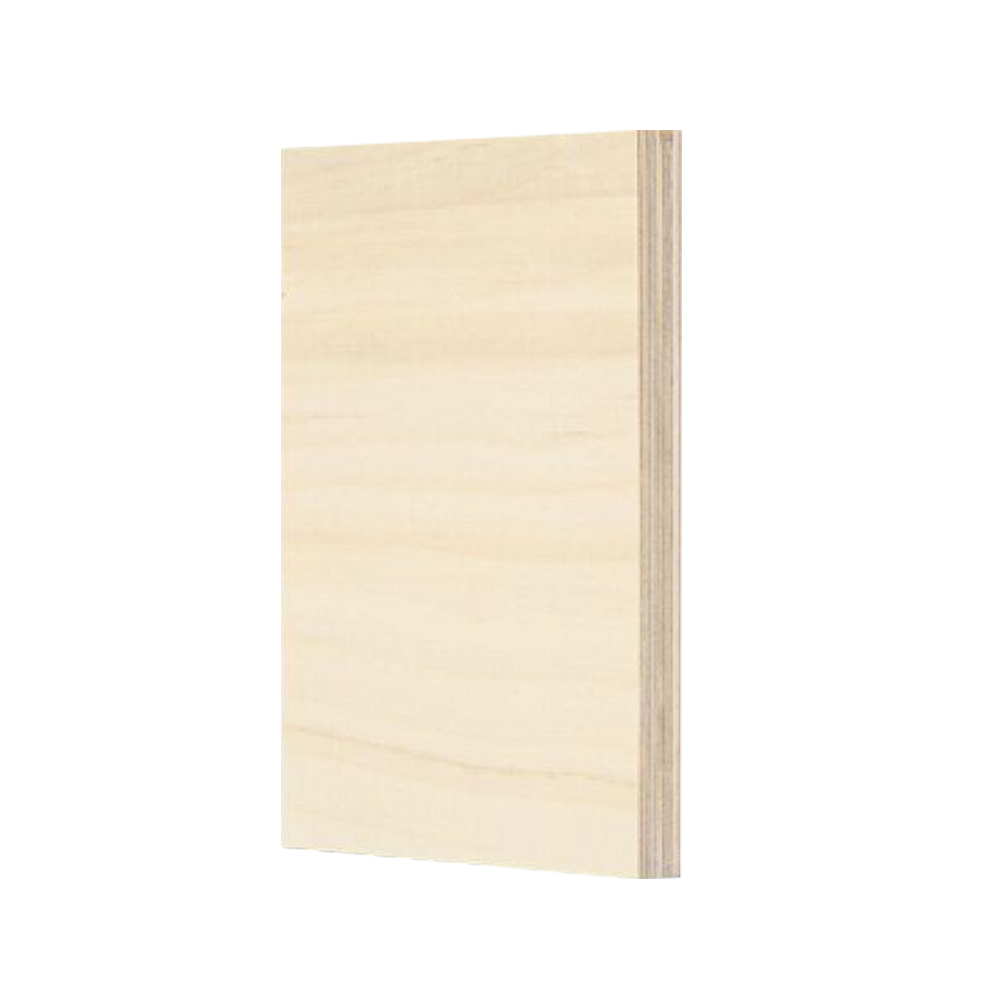
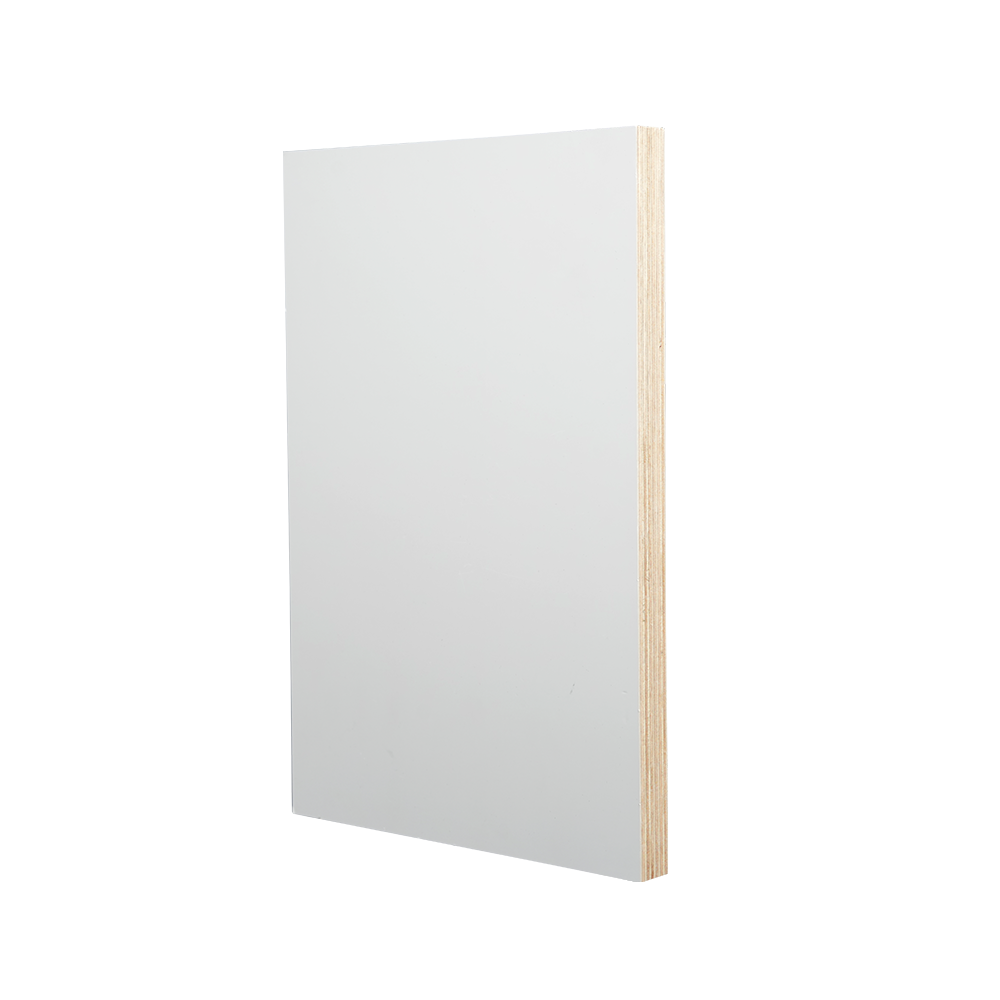
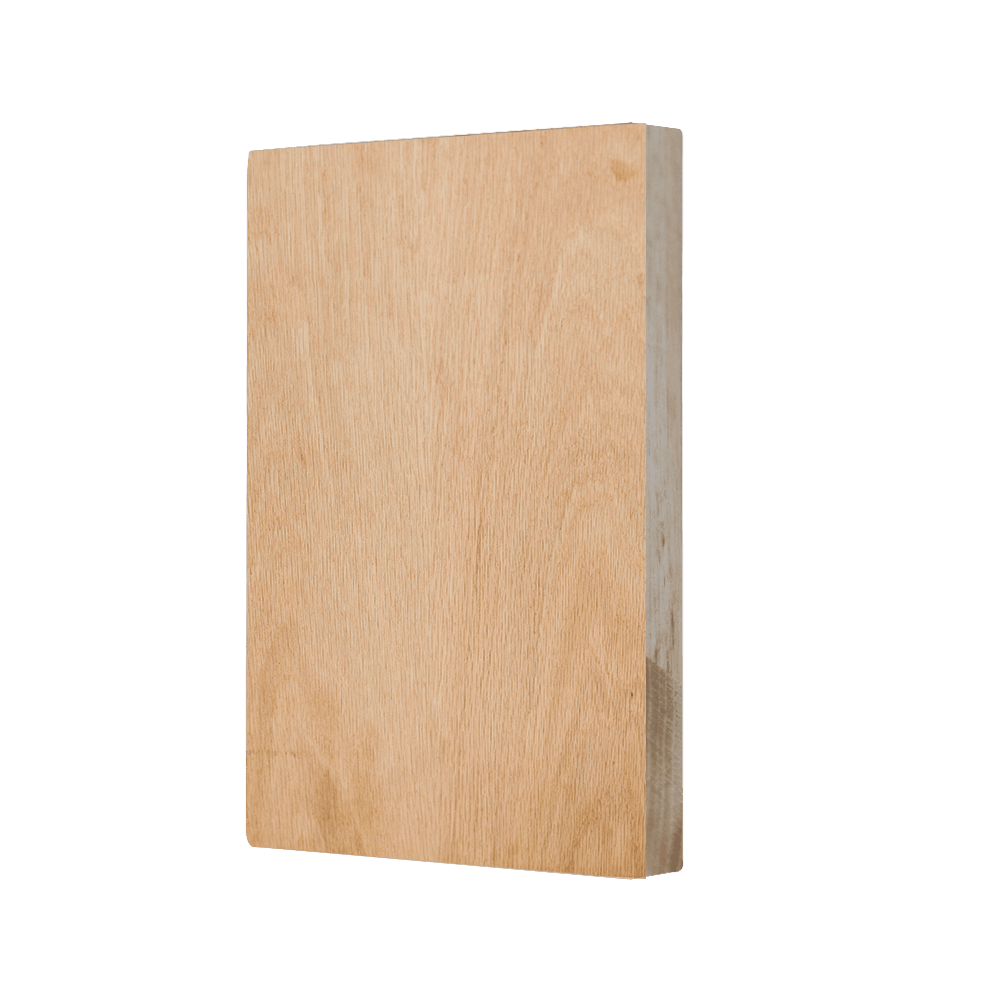
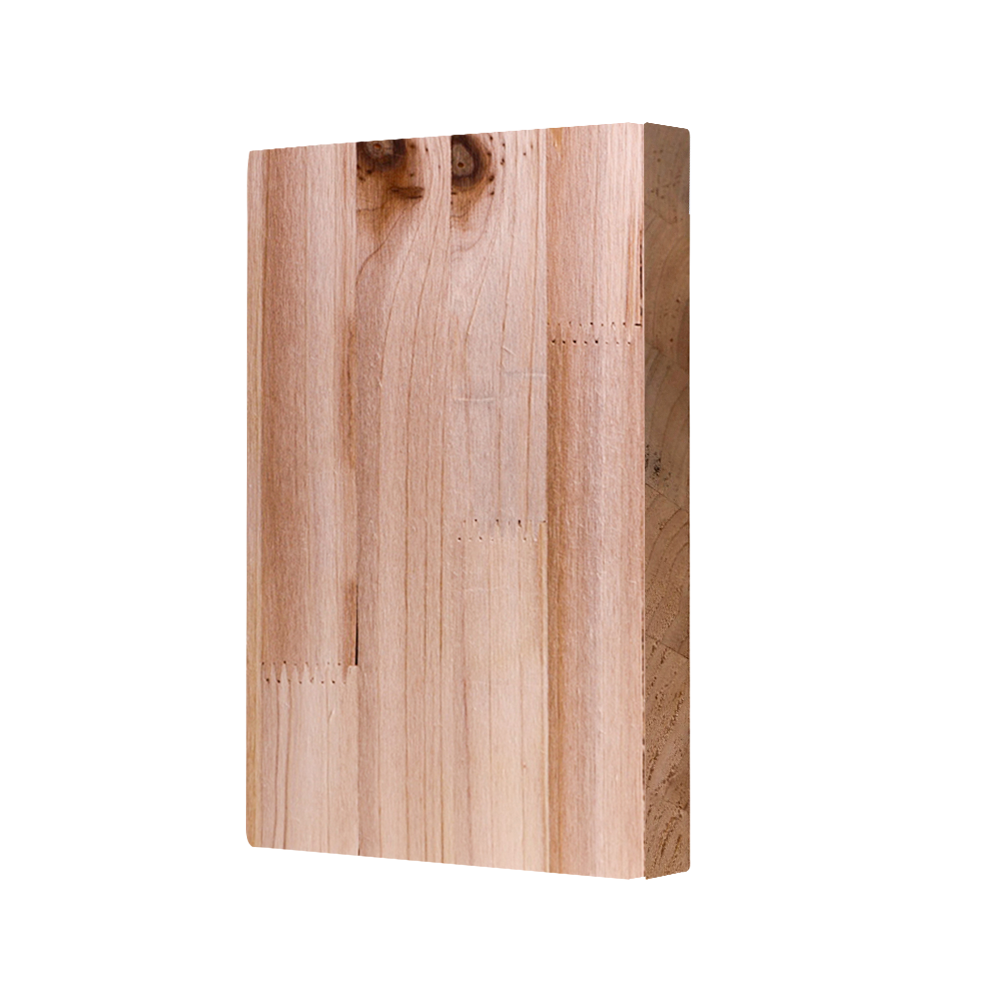
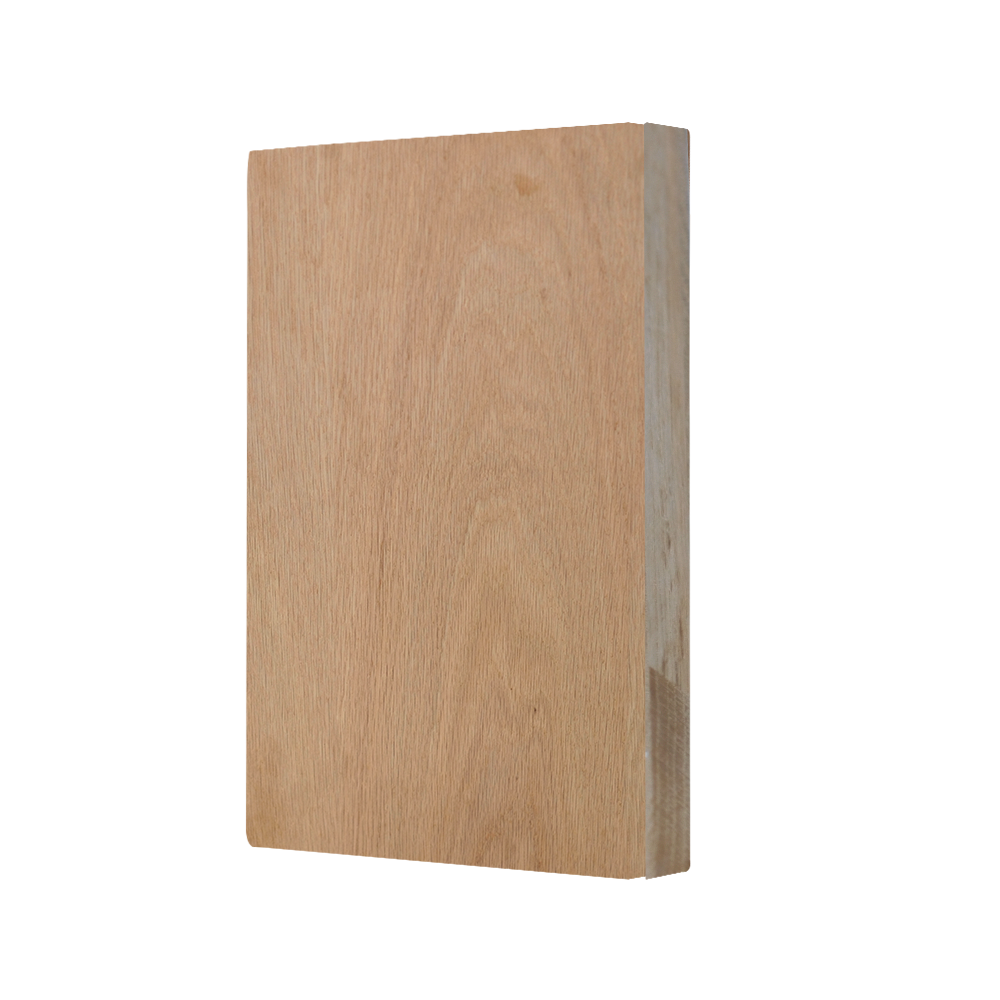
For general wall and slab formwork where the finish is later covered, a yellow shuttering panel with a sealed edge and a phenolic film delivers a balanced cost per pour without paying for a surface that will not be seen.
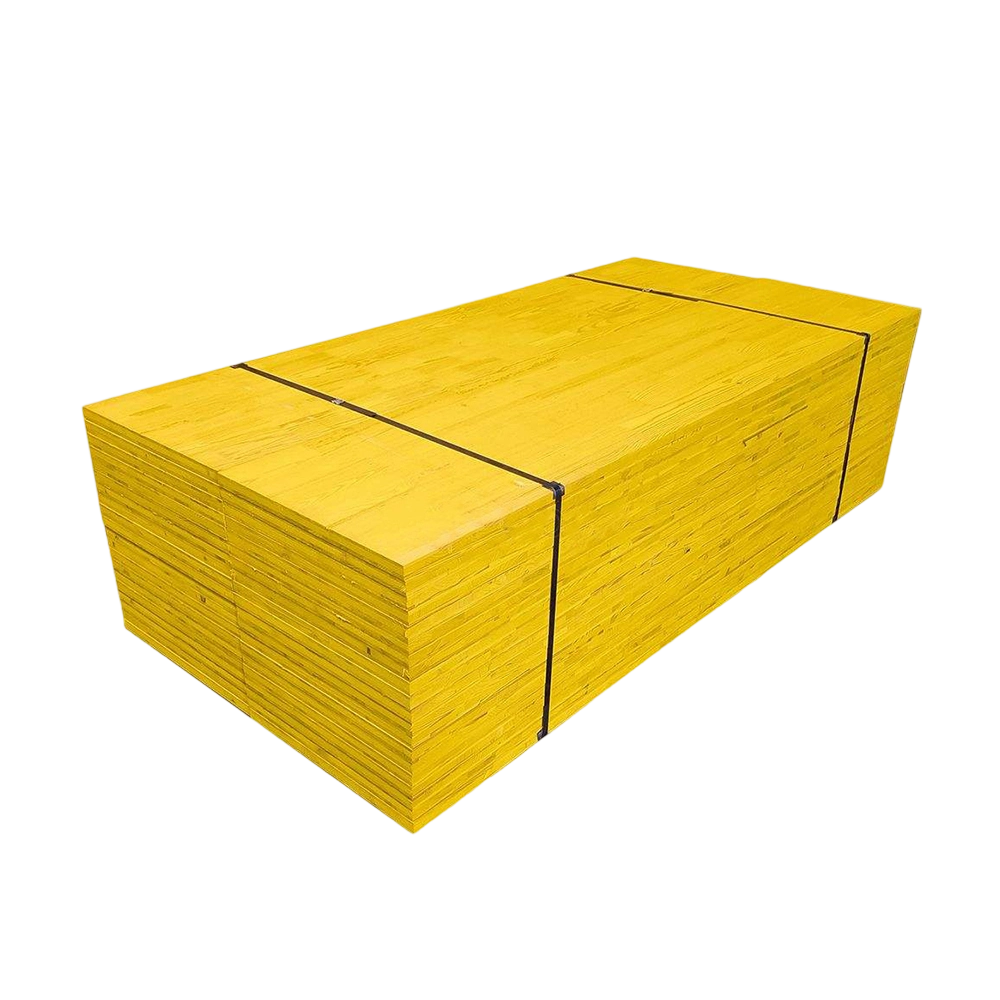 Yellow Shuttering Panel for Wall and Slab FormworkWhere concrete will be covered, this sealed-edge phenolic panel offers a cost-balanced option for general wall and slab pours.View Product →
Supporting panels matter as much as the face. A correctly graded timber beam under the panel limits deflection, keeps the film flat, and removes one of the main hidden causes of short panel life on tall pours.
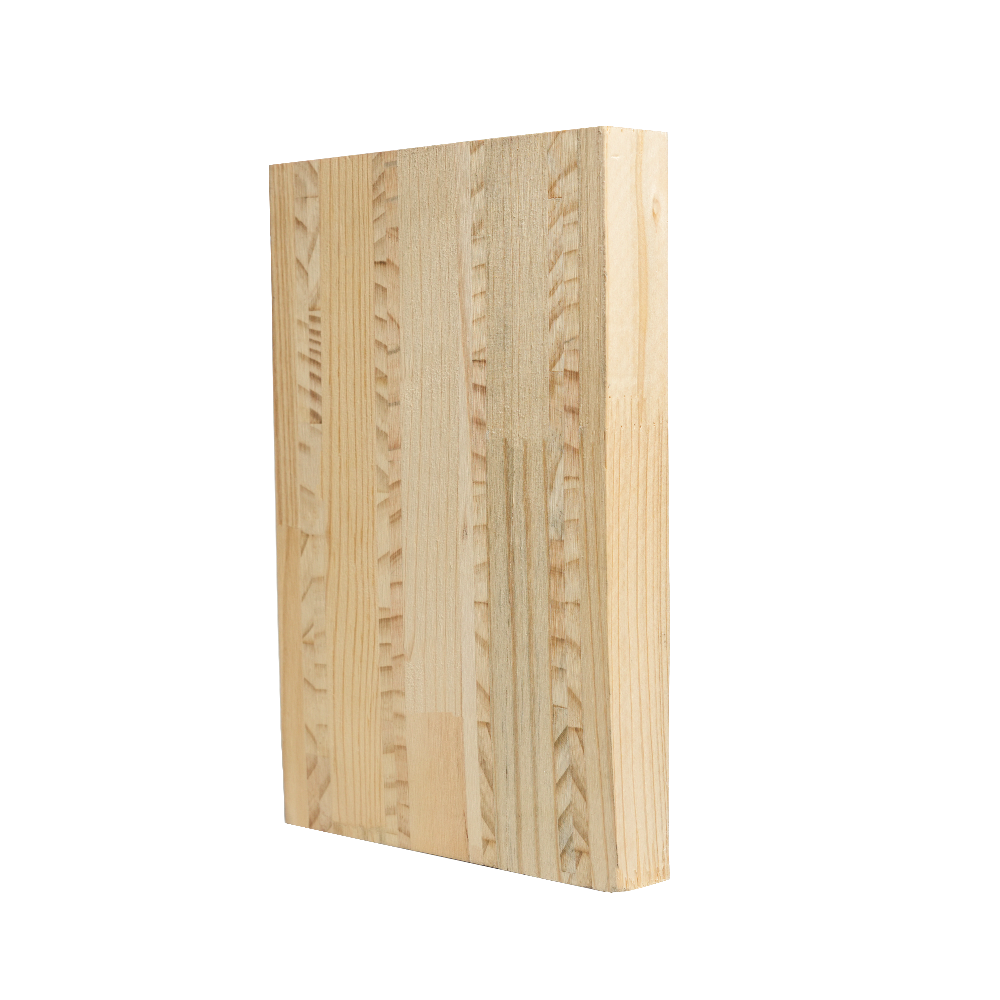
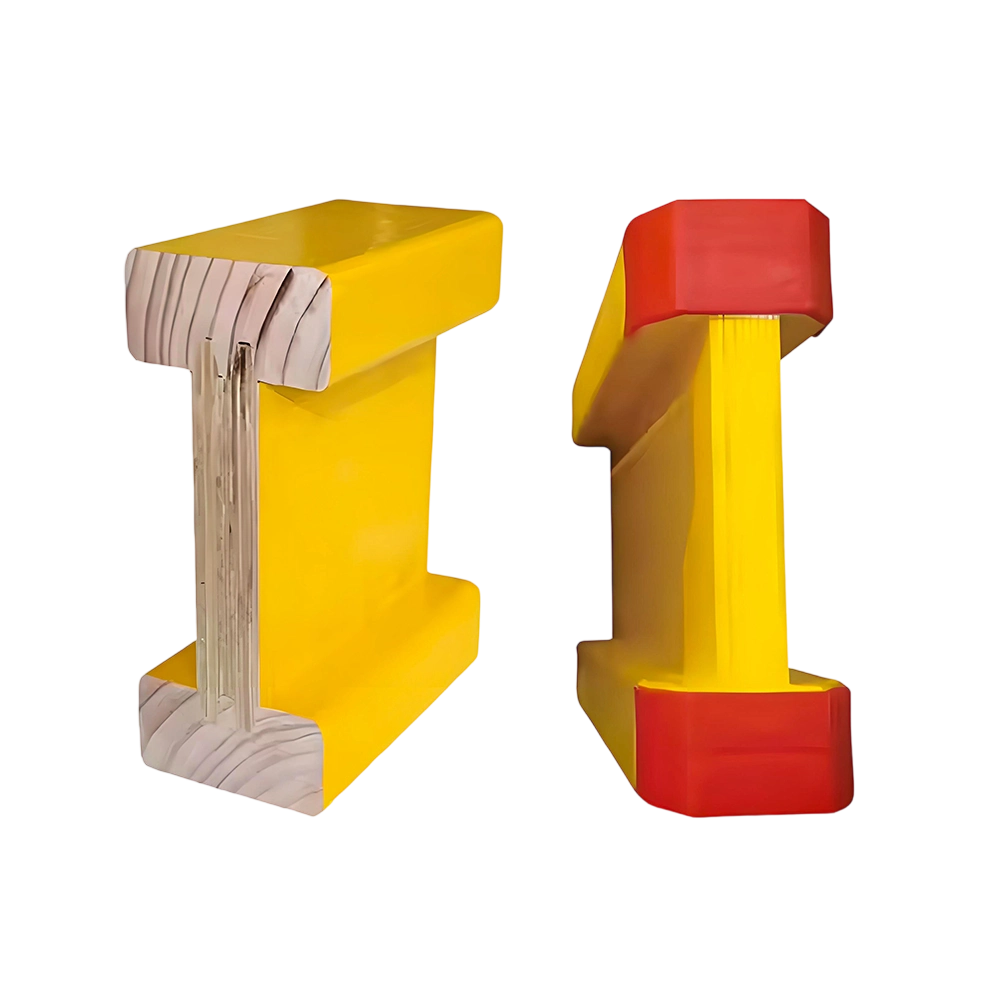 H-16/20/24 Formwork Beam for Supporting PanelsUnder formwork panels, this precision-milled timber beam helps limit deflection and supports modular, reusable shuttering assemblies.View Product →
Full birch core, 220 g phenolic film, factory sealed edges, 21 mm for tall walls. Plan 20 to 30 pours with disciplined cleaning.
Full birch or combi core, 180 g film, 18 mm, site re-sealed edges. Plan 15 to 20 pours with rotation between wall positions.
Combi core, 120 g film, 18 mm, used for foundations and back-of-house pours where finish is not assessed.
A practical inventory policy follows from this: buy one high-cycle specification for the visible walls, and let those panels cascade down to hidden work as they reach the watch conditions in the retirement table. That single habit often recovers five to eight extra pours per panel without any additional purchase.
No, but it usually means fewer losses. Thickness improves stiffness and reduces flexing between supports, which protects the film bond. A 21 mm panel with a 180 g film will often outlast an 18 mm panel with the same film simply because it deflects less. Film weight remains the dominant factor.
Yes, and doing so is standard practice. When one face reaches the watch condition, flip the panel and continue on the second face. Record which face is in use, because crews otherwise keep using the worn face until the concrete finish fails.
Inspect after every pour and re-seal whenever bare timber is visible. In a normal wall cycle with factory-sealed panels, that means touching up roughly every fifth to eighth pour. On cut panels, seal before the first use and inspect more frequently.
Small areas can be cleaned, dried and filled with a compatible epoxy or polyurethane patching compound, then sanded flat. Repairs are visible on fair-faced concrete, so repaired panels should move to hidden work. Large lifts or exposed core along an edge are not worth repairing.
Considerably. High-slump mixes, high cement content and mixes with aggressive admixtures increase paste mobility against the film. Lightweight or fibre-reinforced mixes abrade the face more. If the mix is fixed by specification, raise the film weight to compensate rather than accepting a shorter cycle.
Steam curing shortens film life by embrittling the resin and increasing thermal movement at the bond line. Where steam curing is required, expect a reduction of roughly 20 to 30 percent against the standard reuse range and inspect edges before every cycle.
Flat, level, under cover, with clean spacers and the film faces protected. Never store panels on edge leaning against a wall for long periods, because the lower edge takes load and deforms. A dry, ventilated stack that is inspected before each project start will return more pours than any single site practice.
related products


Copyright © Tianma Lvjian Group Co., Ltd. Rights Reserved.
Wholesale Construction Plywood Manufacturers Privacy
 English
 中文简体