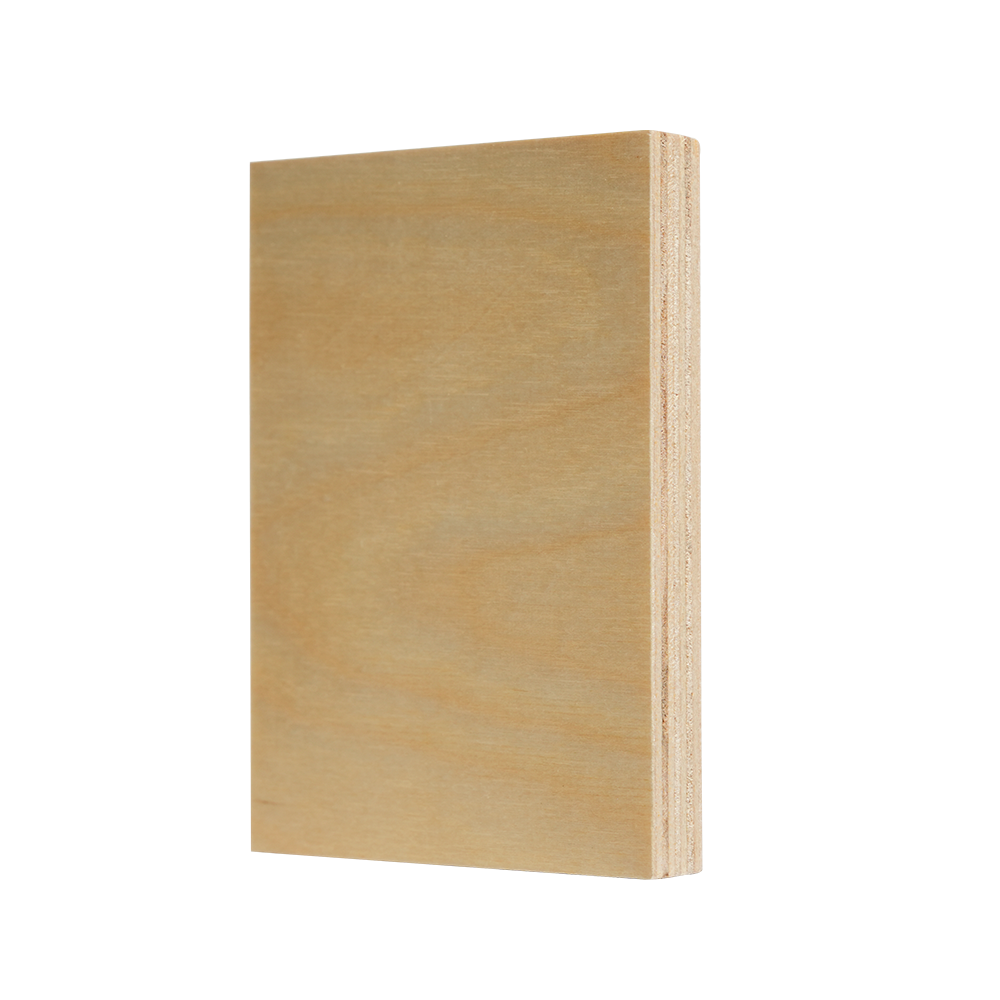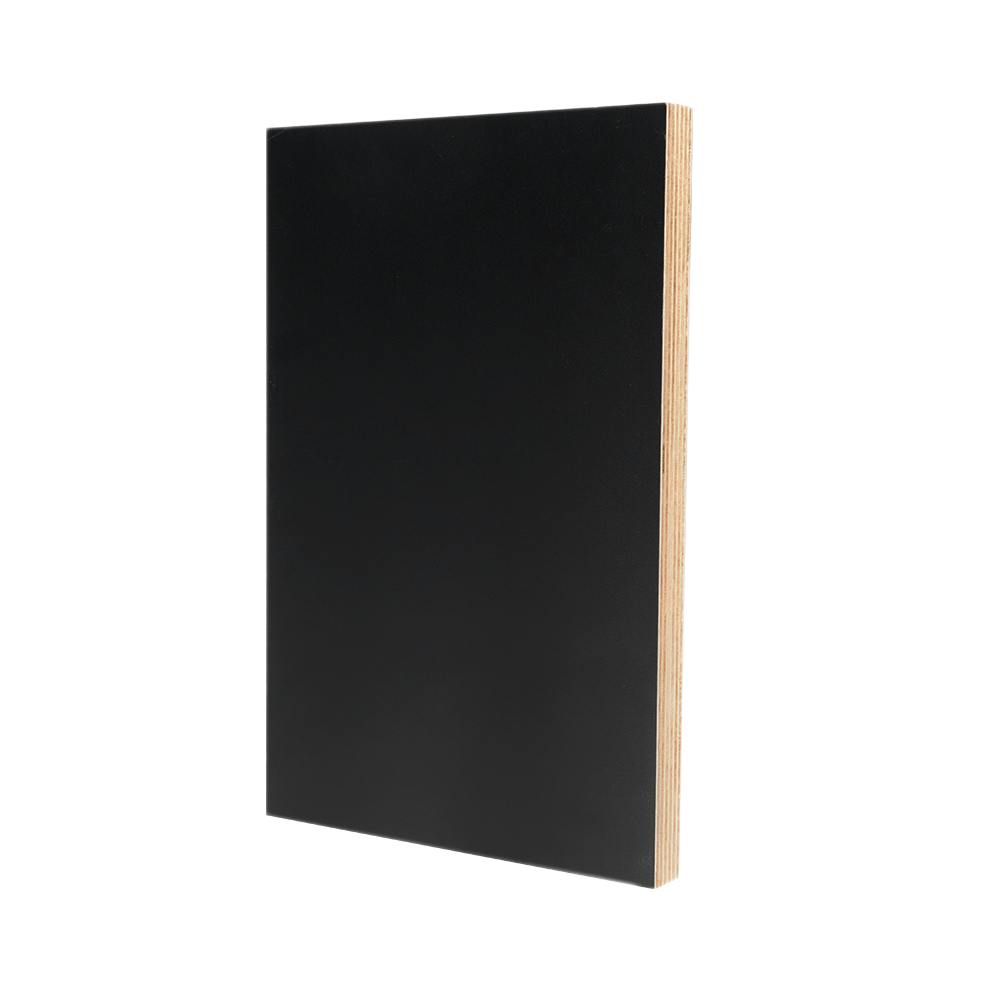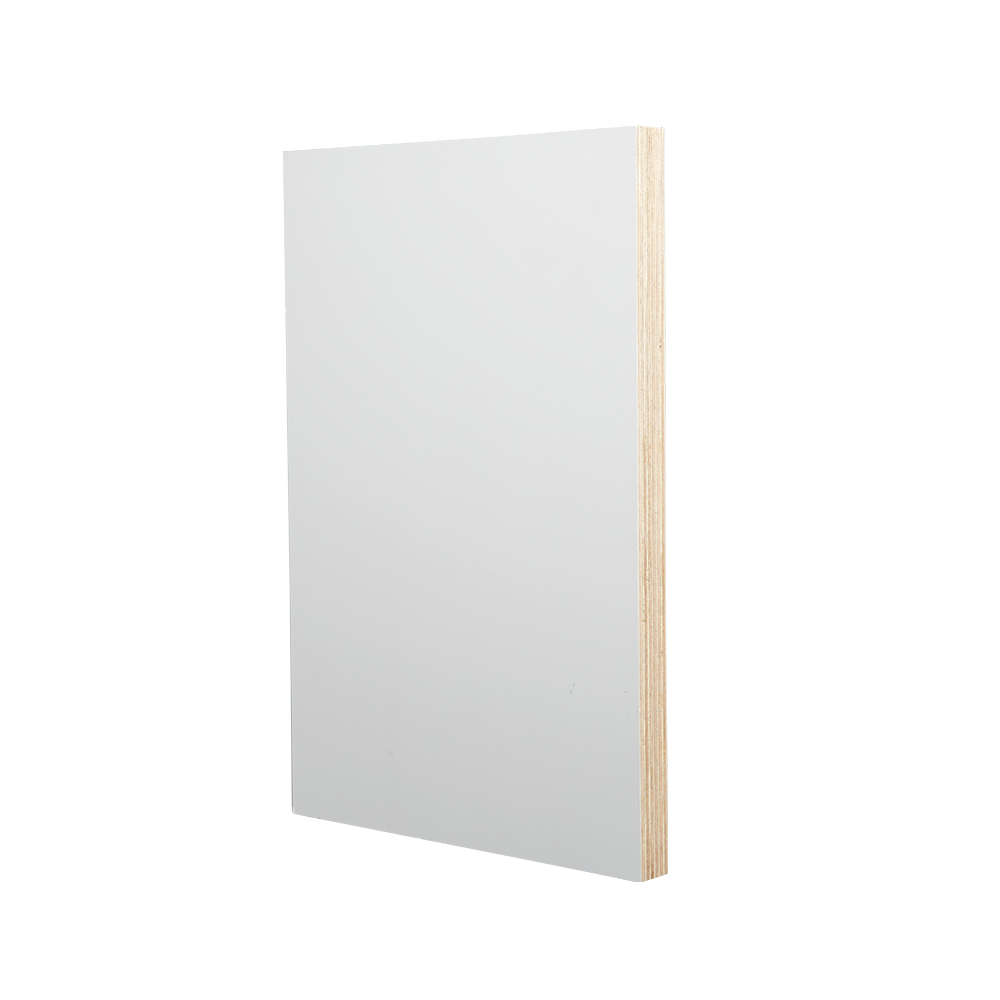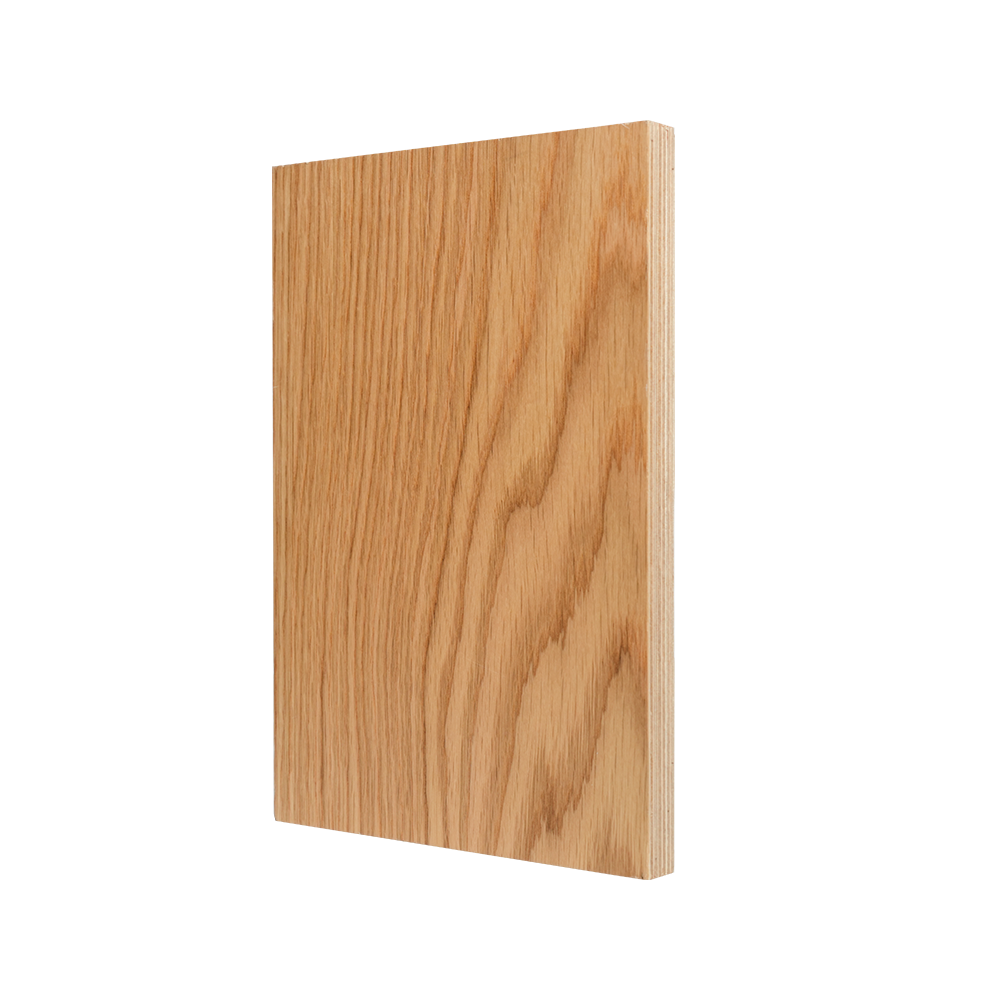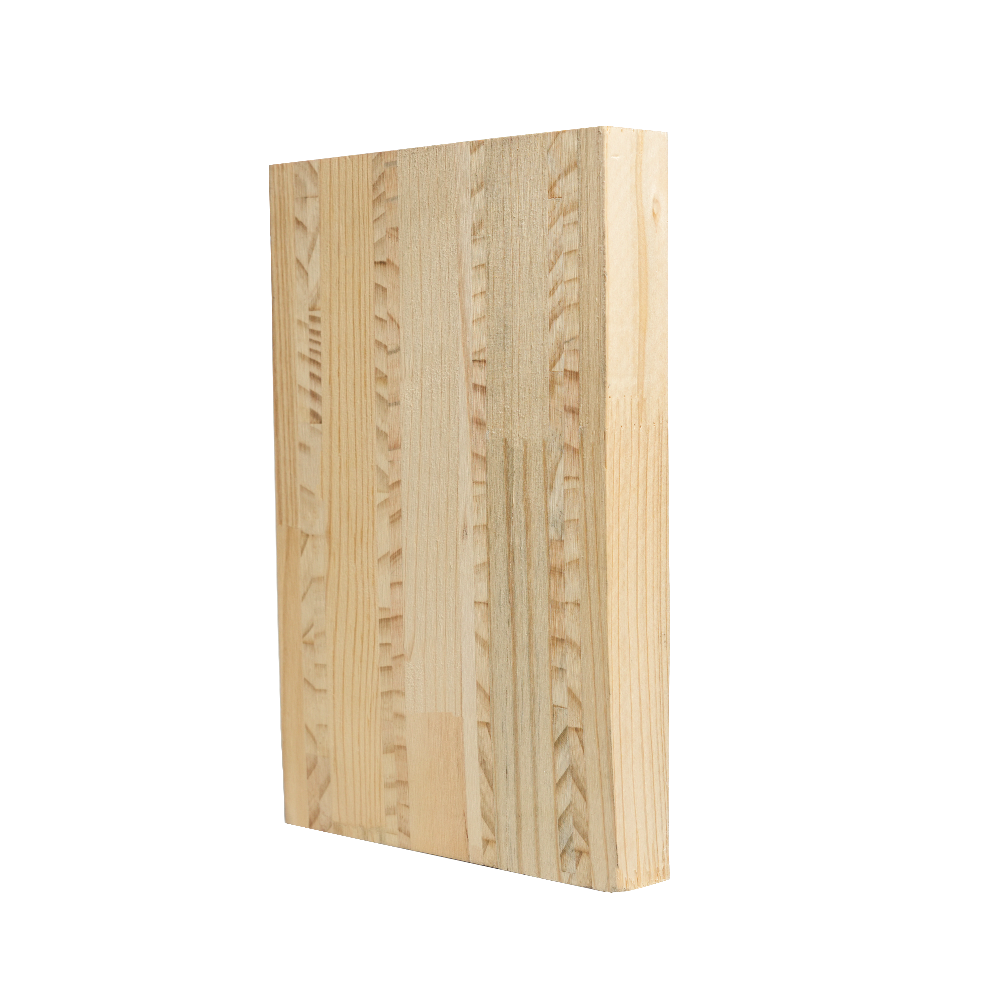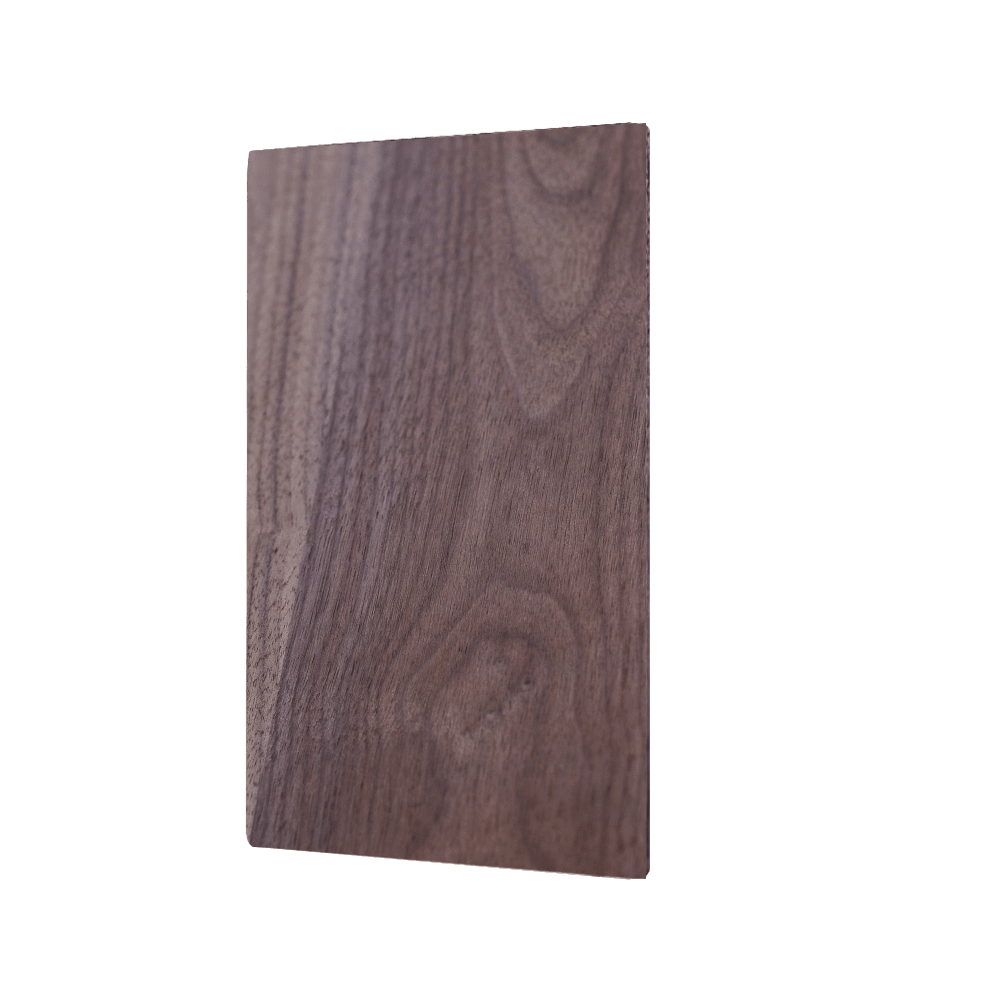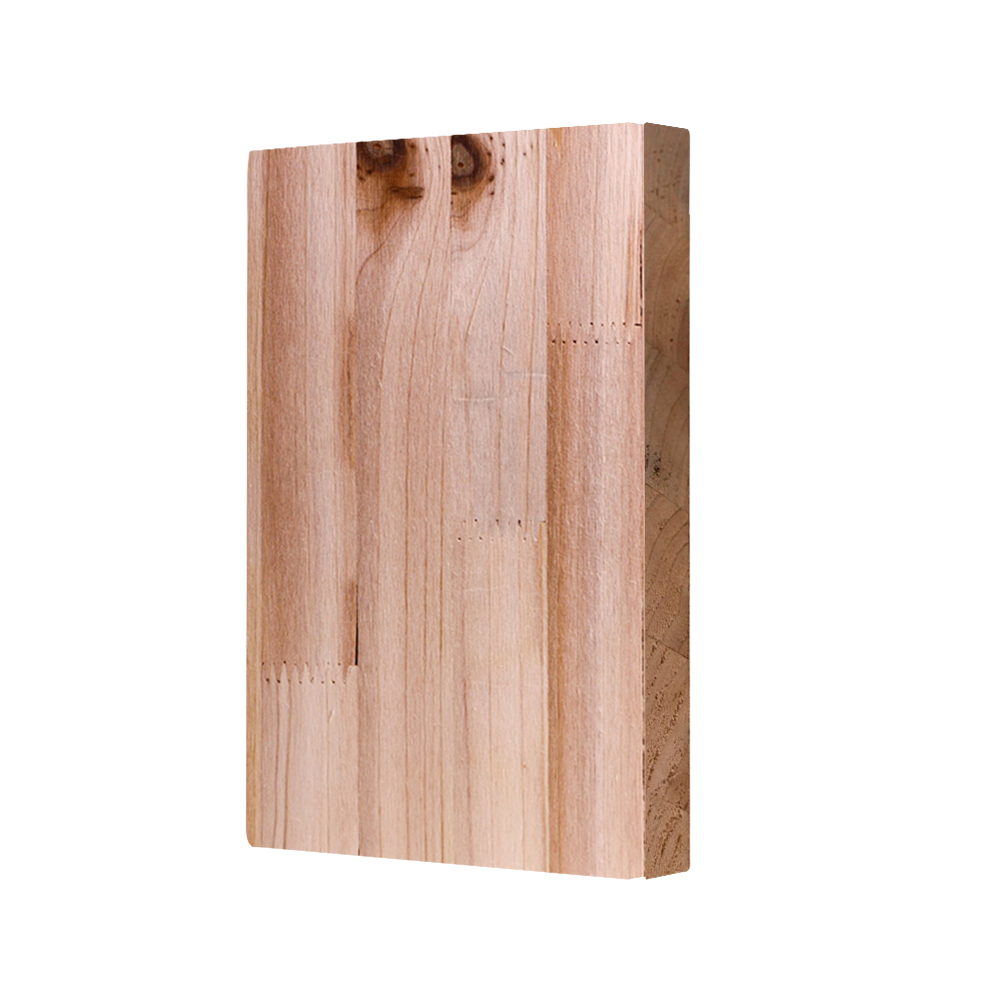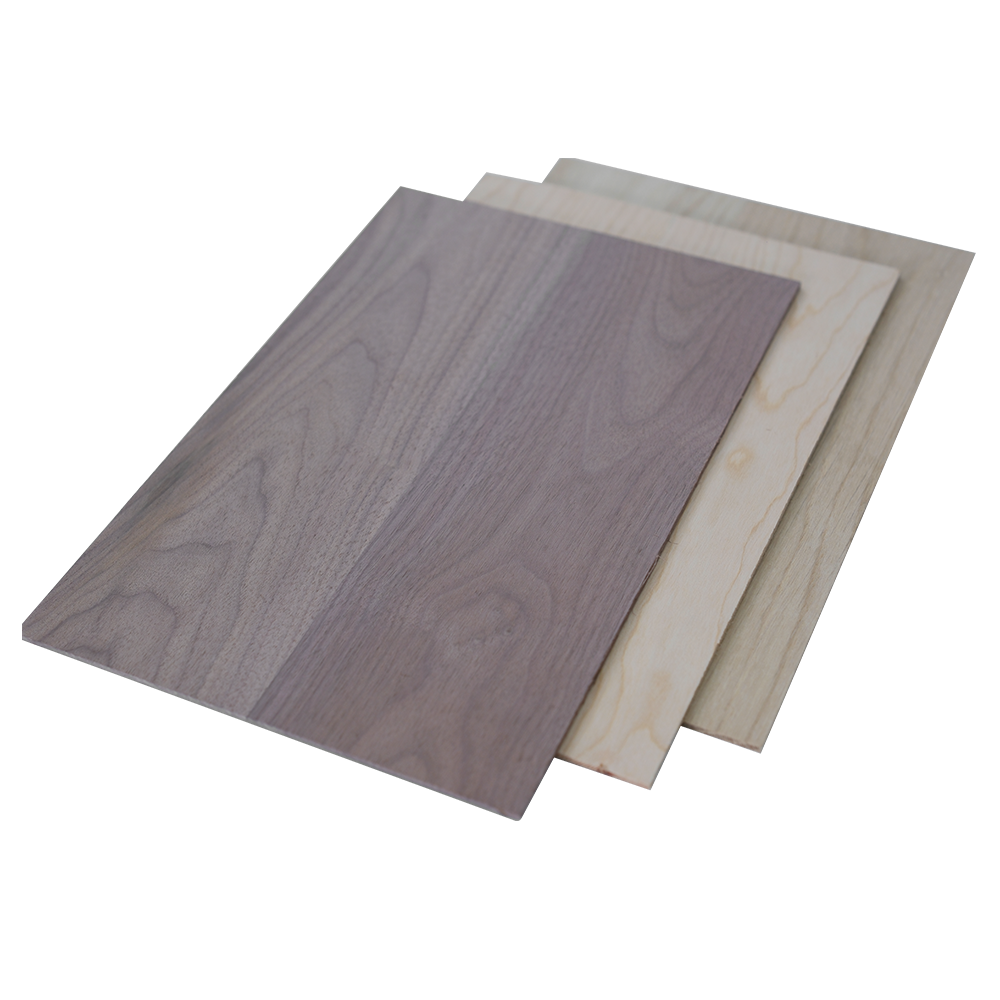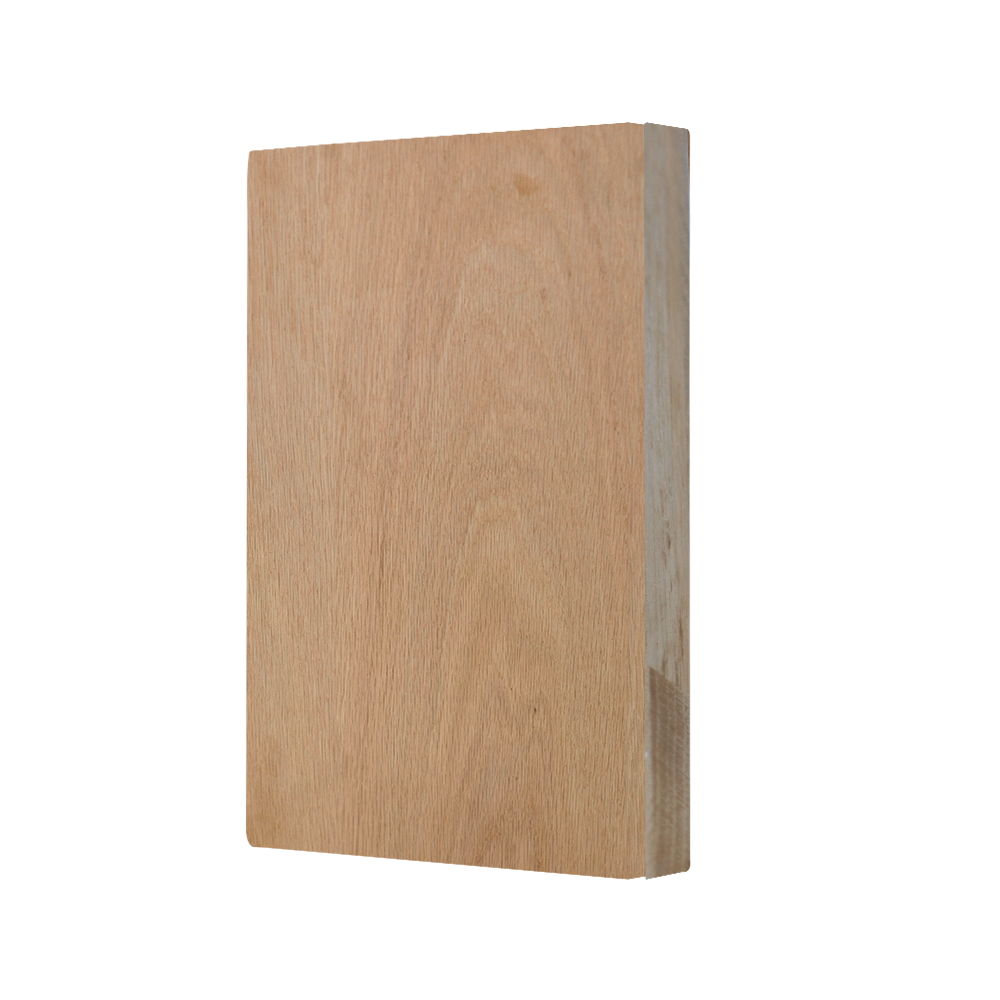

Before diving deep into whether Block Board is superior to plywood, we must first understand the structural logic of this material. Block Board is a specialized composite board whose soul lies in its "sandwich" structure.
The construction of Block Board is distinctly different from ordinary plywood. It primarily consists of three layers:
Producing high-quality Block Board requires precision machining. First, solid timber is cut into uniform strips, followed by panel assembly. To ensure the flatness of the Block Board, modern processes usually employ "machine-filling" methods, where machines apply force to squeeze the wood strips tightly together, minimizing internal gaps.
| Parameter Index | Standard Block Board Specifications |
| Standard Size | 1220mm x 2440mm (4ft x 8ft) |
| Common Thickness | 12mm, 15mm, 18mm, 19mm, 25mm |
| Core Strip Width | Typically between 20mm and 30mm |
| Moisture Content | 8% - 12% |
| Density | 450 - 650 kg/m³ (depending on core material) |
Although Block Board and plywood may look similar on the surface, their physical properties and internal engineering designs differ significantly.
Plywood is made of multiple layers of thin wood (veneers) glued together with grain directions perpendicular to each other. This means the interior of plywood is filled with numerous glue layers. In contrast, Block Board is primarily composed of solid wood blocks, with a much higher wood-to-glue ratio, giving Block Board a texture closer to solid wood.
Since the core of Block Board usually utilizes light-density wood (such as poplar or pine), its overall weight is generally lighter than hardwood plywood of the same thickness. This lightweight characteristic is crucial for large furniture (like full-height wardrobes) as it reduces long-term strain on hinges and tracks, effectively preventing structural fatigue caused by excessive self-weight.
This is the core selling point of Block Board. Plywood, due to its laminated structure, shows good resilience under impact but tends to bend slowly under long-term loads. In comparison, the longitudinal rigidity of Block Board is extremely strong; it rarely sags or bends over long spans, making it the ideal choice for long shelving.
In wood mechanics, the performance of Block Board primarily depends on its longitudinal bending strength.
Since the core of Block Board is assembled from long wood strips, this structure naturally possesses the ability to resist lateral bending. When environmental humidity changes, the tiny gaps between the solid wood strips can absorb part of the stress caused by wood expansion, keeping the entire Block Board flat and resistant to warping.
The load-bearing direction of Block Board usually aligns with the direction of its internal wood strips. When designing furniture, as long as the force direction is correct, Block Board can support heavy books, appliances, or clothing without the need for additional middle supports.
Below is the comparison data between Block Board and ordinary plywood for key physical properties:
| Performance Property | Block Board (18mm) | Plywood (18mm) |
| Bending Strength (Longitudinal) | Very High | Medium |
| Bending Strength (Transverse) | Lower | High |
| Screw Holding Power (Side) | Excellent (Solid Core) | Fair (Laminated layers may split) |
| Flatness Retention | Maintains flatness long-term | Prone to slight warping from moisture |
| Self-Weight | Lighter | Heavier |
For carpenters and furniture manufacturers, the workability of Block Board is another major reason for its popularity.
The interior of Block Board consists of solid wood blocks, which can be easily cut using standard woodworking saws. The cut edges are less prone to severe chipping or delamination compared to plywood, greatly improving onsite construction efficiency.
This is a massive advantage for Block Board. When you drive a screw into Block Board, it embeds into the solid wood blocks, providing excellent mechanical bonding. In contrast, screws at the laminated edges of plywood often cause the board to "burst" or delaminate, and screw-holding power drops significantly after repeated assembly. With Block Board, the structure remains stable even after multiple repairs.
While the edges of Block Board are not as aesthetically pleasing as solid wood, their structural stability makes them perfect for edge banding. Whether using PVC edge bands, solid wood strips, or wood veneers, Block Board provides a flat bonding surface. Additionally, its surface flatness is extremely high, and the effect after applying decorative panels (HPL), paint, or stickers is very refined without showing the underlying texture.
Having understood the characteristics of Block Board, we can clearly identify where it "wins."
For bookshelves exceeding 1 meter in length, if plywood is used, the middle will inevitably sag over time. Using Block Board ensures a straight line for years.
For long vertical components like wardrobe doors and room doors, using Block Board effectively prevents warping and deformation caused by seasonal changes.
For bed frame structures that require high load-bearing pressure and stability, Block Board provides a support sensation similar to solid wood.
In areas not in direct contact with water, the lightweight and easy-to-process nature of Block Board makes it a highly cost-effective choice.
Not all Block Board is the same. Based on the humidity and weather resistance requirements of the environment, Block Board is generally divided into two main grades.
Also known as "Interior Grade" Block Board. This board is bonded with Urea Formaldehyde resin.
Also known as "Exterior Grade" or "Waterproof Grade" Block Board. This board is bonded with Phenol Formaldehyde resin.
The physical parameters of Block Board largely depend on the type of wood strips filled inside:
| Core Wood Type | Weight | Hardness/Compression | Cost | Typical Species |
| Softwood Core | Light | Medium | Lower | Pine, Cedar, Poplar |
| Hardwood Core | Heavy | High | Higher | Eucalyptus, Gurjan, Mixed Hardwood |
In large renovation projects, budget allocation is core. Block Board is often seen as the "golden balance" between performance and cost.
Compared to high-quality thick plywood, the production cost of Block Board is lower. This is because the core uses solid wood strips (often processed from timber remnants), rather than whole, intact wood veneers. This means users can buy boards with solid wood thickness and rigidity at a lower price.
Because Block Board is lighter and easier to cut, the speed of onsite woodworking is faster, and tool wear is lower. For projects requiring extensive onsite carpentry, using Block Board can significantly shorten the construction period, thereby saving on labor costs.
Environmental performance is a top concern for modern families. The key to evaluating whether Block Board is eco-friendly lies in its formaldehyde emission levels.
When purchasing Block Board, always check the environmental grade labels on the back.
| Grade Standard | Formaldehyde Emission Limit | Recommended Application |
| E0 Grade | ≤ 0.5 mg/L | Baby rooms, enclosed bedrooms, high-end residences |
| E1 Grade | ≤ 1.5 mg/L | General interior decoration, meets mandatory requirements |
| E2 Grade | ≤ 5.0 mg/L | Limited to outdoor or extremely well-ventilated non-living areas |
Note: Block Board has many internal gaps between strips; if the edges are not sealed properly or inferior glue is used, the formaldehyde release period may be longer. Therefore, choosing certified Block Board is crucial.
There are several common myths circulating in the market about Block Board that need clarification:
At the purchase site, you can identify the quality of Block Board through these three steps:
The Sound Test: Tap the surface of the board with your knuckles. If the sound is crisp and uniform, the internal wood strips are tightly packed; if you hear a dull or hollow sound, it indicates large internal gaps (core gaps).
The Side View: Observe the arrangement of wood strips from the side. High-quality Block Board has uniform color in its wood strips, no rot, no knots, and the layers are tightly bonded without gaps.
The Weight Test: For the same specifications, a board with moderate weight usually implies that the core moisture content is well-controlled and the density is reasonable. Overly heavy boards may exceed moisture limits, while overly light ones may use inferior, low-density pine.
Answer: High-quality Block Board undergoes high-temperature drying and chemical preservative treatments (such as adding insect repellents) during manufacturing. As long as the environment is kept dry, its termite resistance is similar to treated solid wood.
Answer: Plywood has interlaced internal stresses; on vertical surfaces exceeding 2 meters, it is highly prone to slight twisting due to humidity. Block Board, with its consistent longitudinal fiber direction, provides excellent anti-deformation rigidity, ensuring cabinet doors remain flat and do not jam over time.
Answer: In a well-maintained, dry indoor environment, furniture made from Block Board can have a lifespan of 15-20 years or even longer.
related products


Copyright © Tianma Lvjian Group Co., Ltd. Rights Reserved.
Wholesale Construction Plywood Manufacturers Privacy
 English
 中文简体
中文简体