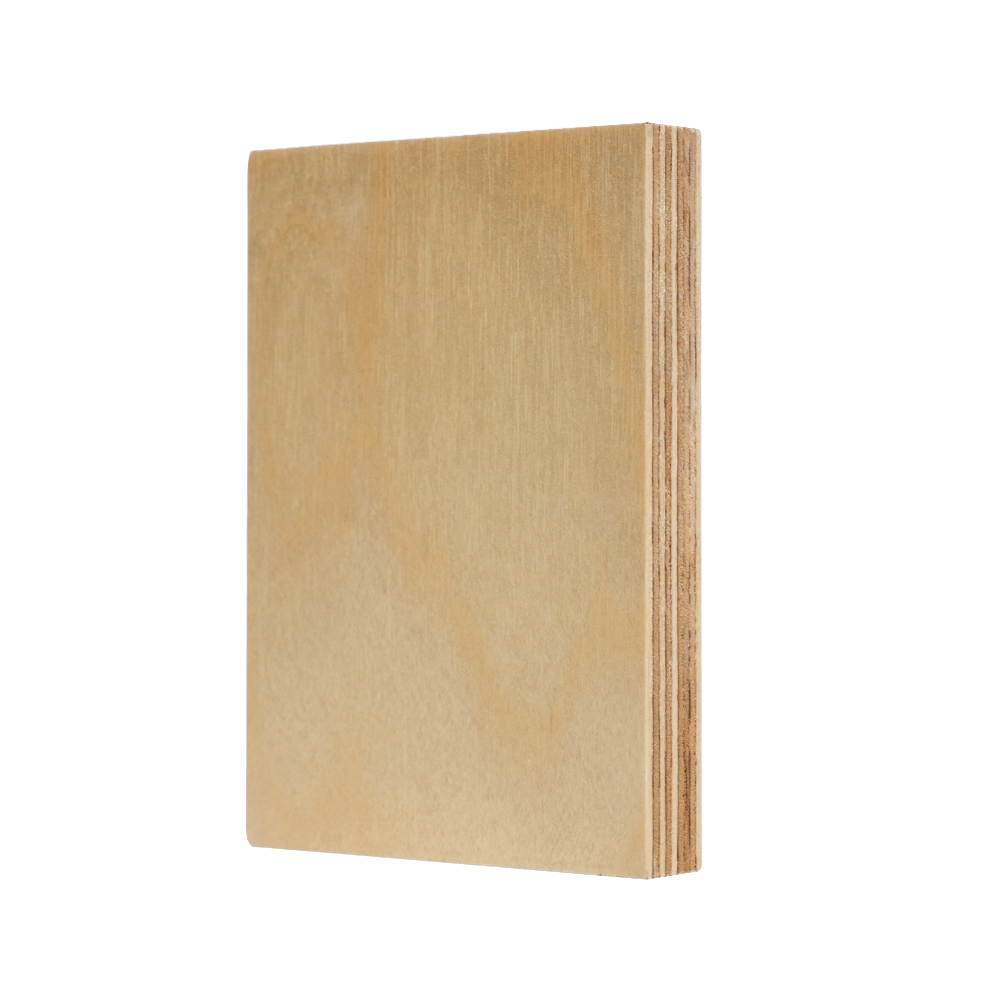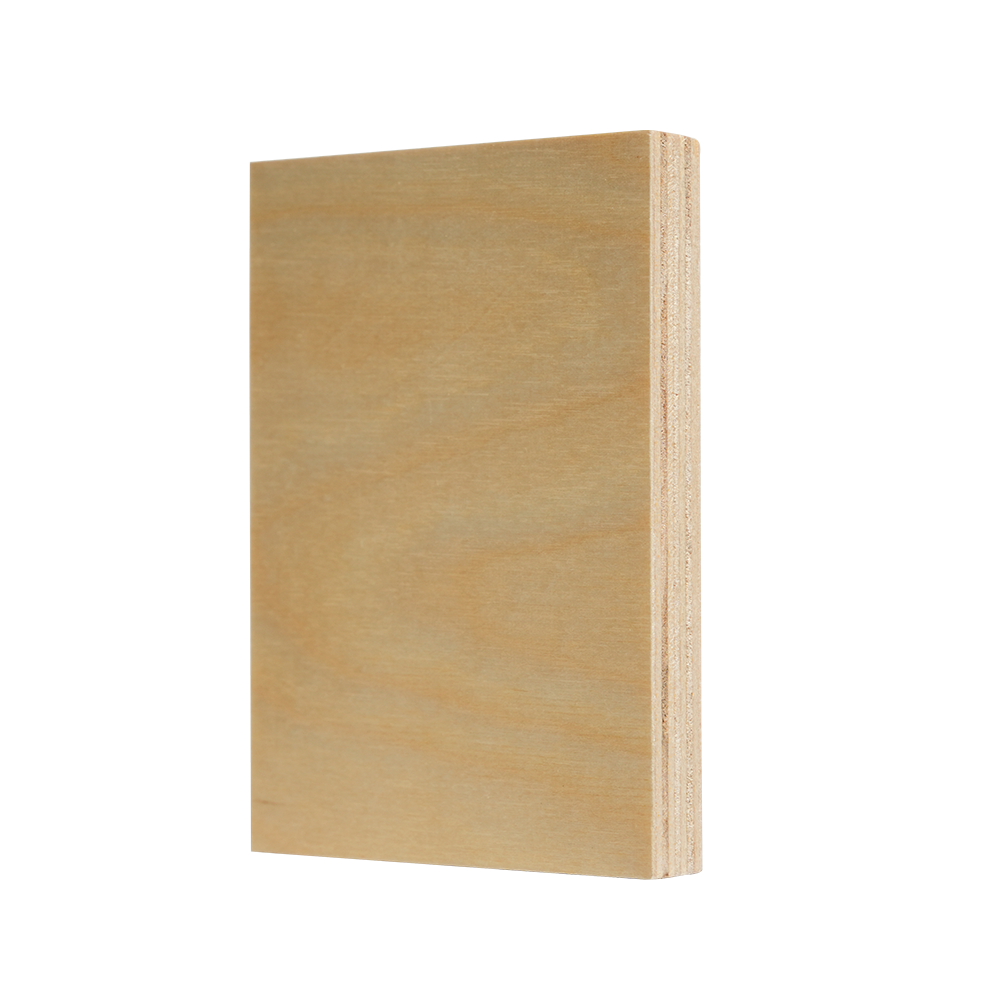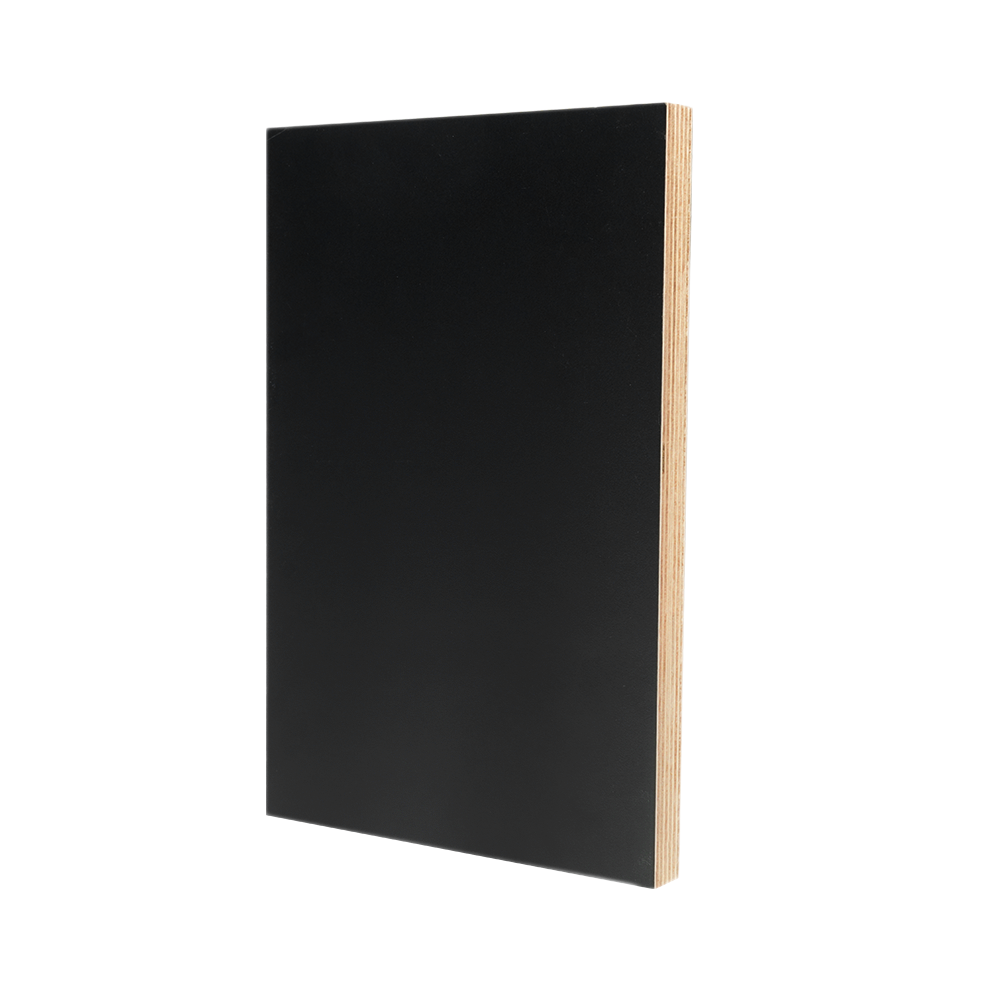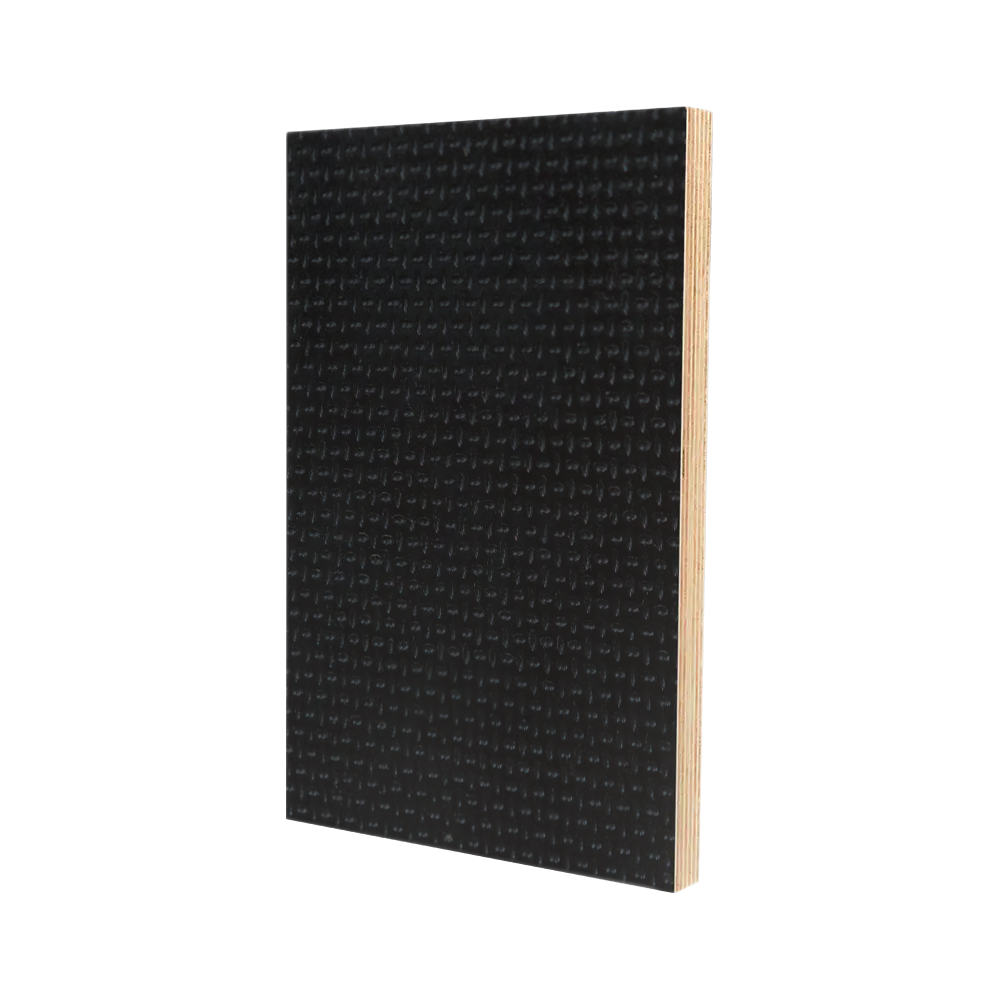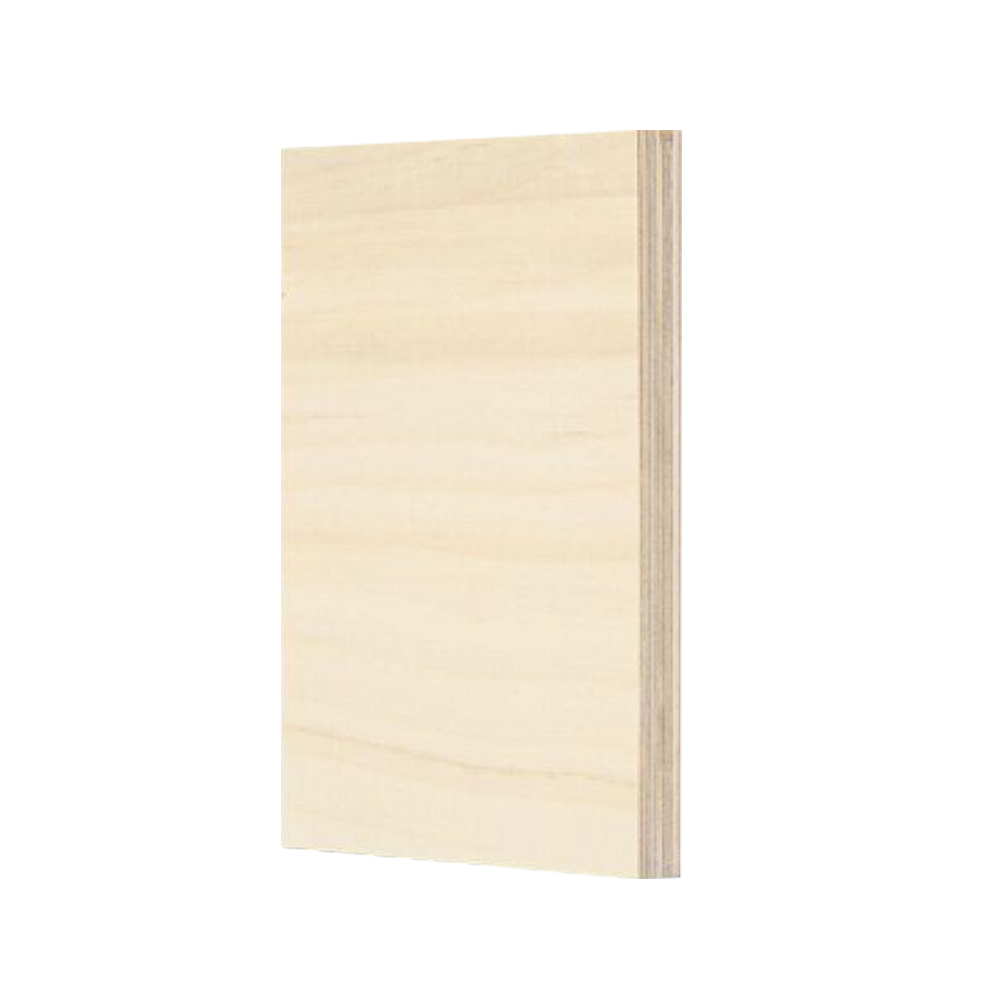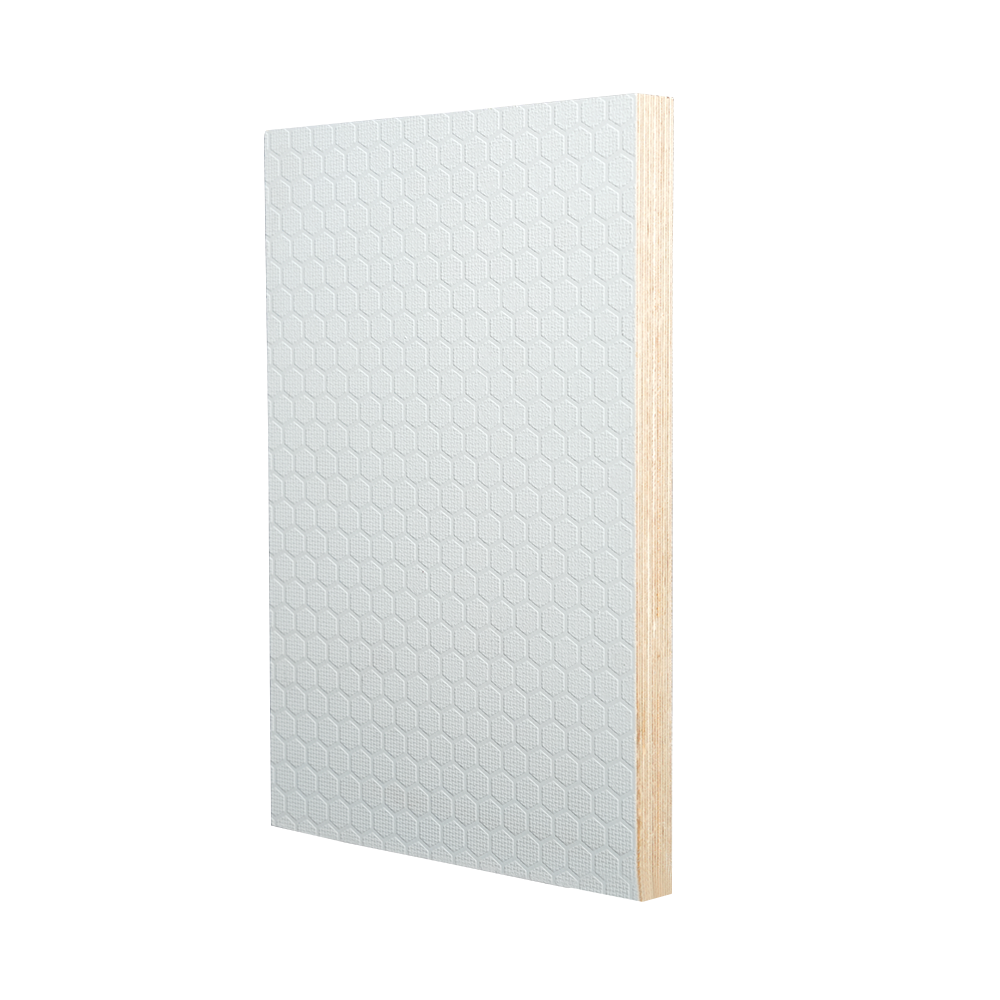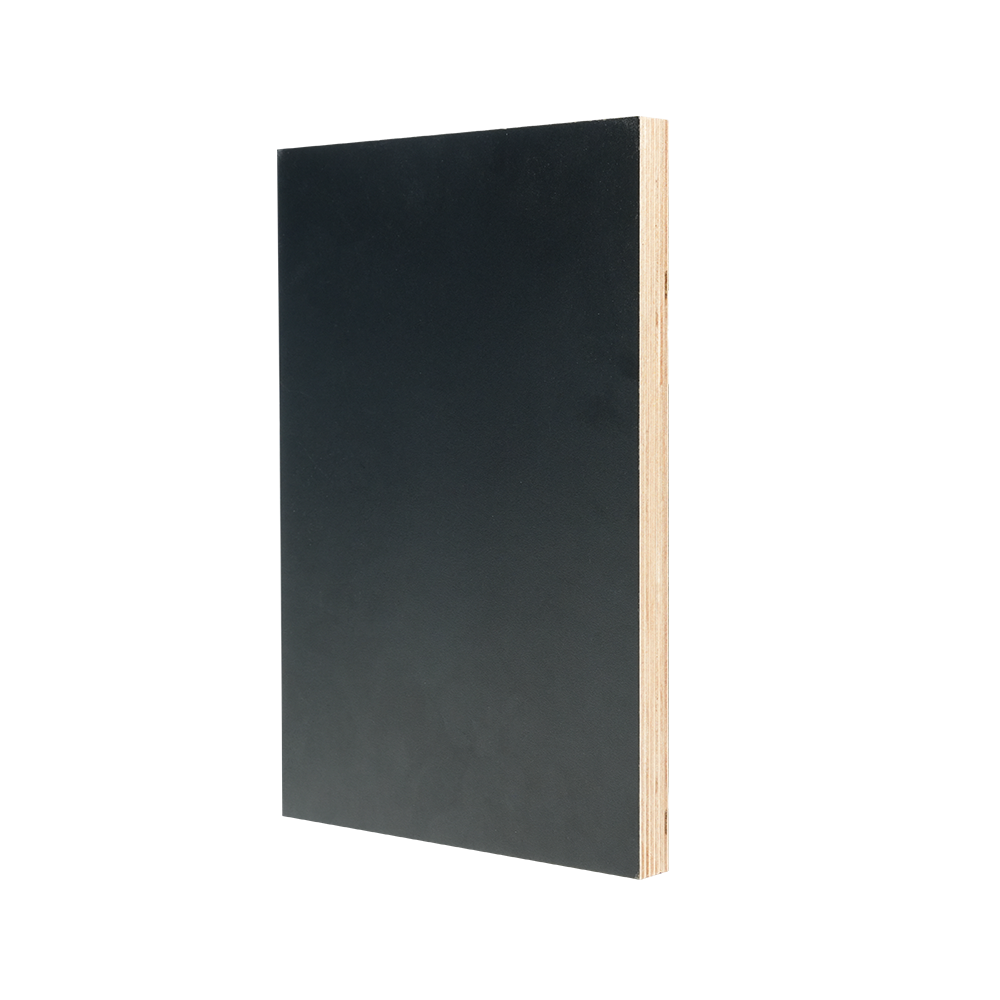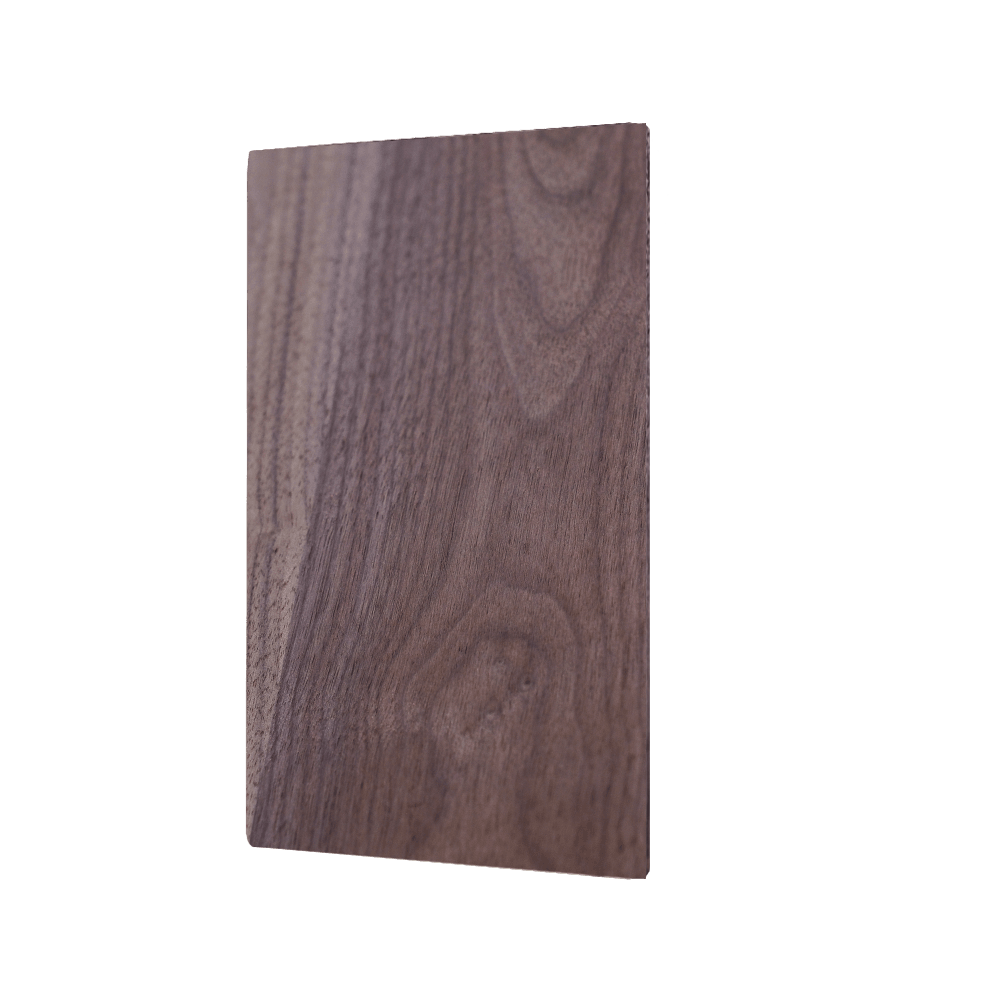

What is the difference between plywood and veneer? Plywood is an engineered panel made of several thin wood layers glued together with alternating grain directions, while veneer is a single thin slice of wood, commonly 0.3 mm to 0.6 mm thick, applied as a decorative skin. Is veneered wood real wood? Yes. A veneer face is genuine timber sliced from a log, and when it is bonded to a plywood core the result is Veneered Birch Plywood, a panel that is made of wood from the face layer through to the core.
Plywood is a structural sheet material. Thin layers called plies are peeled from logs, dried, glued and pressed so that the grain of each ply runs at right angles to its neighbours. That cross-banding spreads stress in both directions, which is why a plywood sheet resists splitting, holds screws well and stays flat far better than a board cut from a single plank.
Veneer is a thin sheet of real wood produced by slicing or peeling a log. It carries no meaningful load by itself. Its job is to deliver the grain, colour and feel of a chosen species on a surface, while a more stable and economical substrate underneath does the structural work.
Veneered wood is a composite in which a real-wood veneer is laminated to a core panel. When the core is plywood, every layer in the panel is a wood product. When the core is a fibre or particle panel, the surface is still real wood, but the interior is reconstituted material. The quality of the core is what separates a premium panel from an average one.
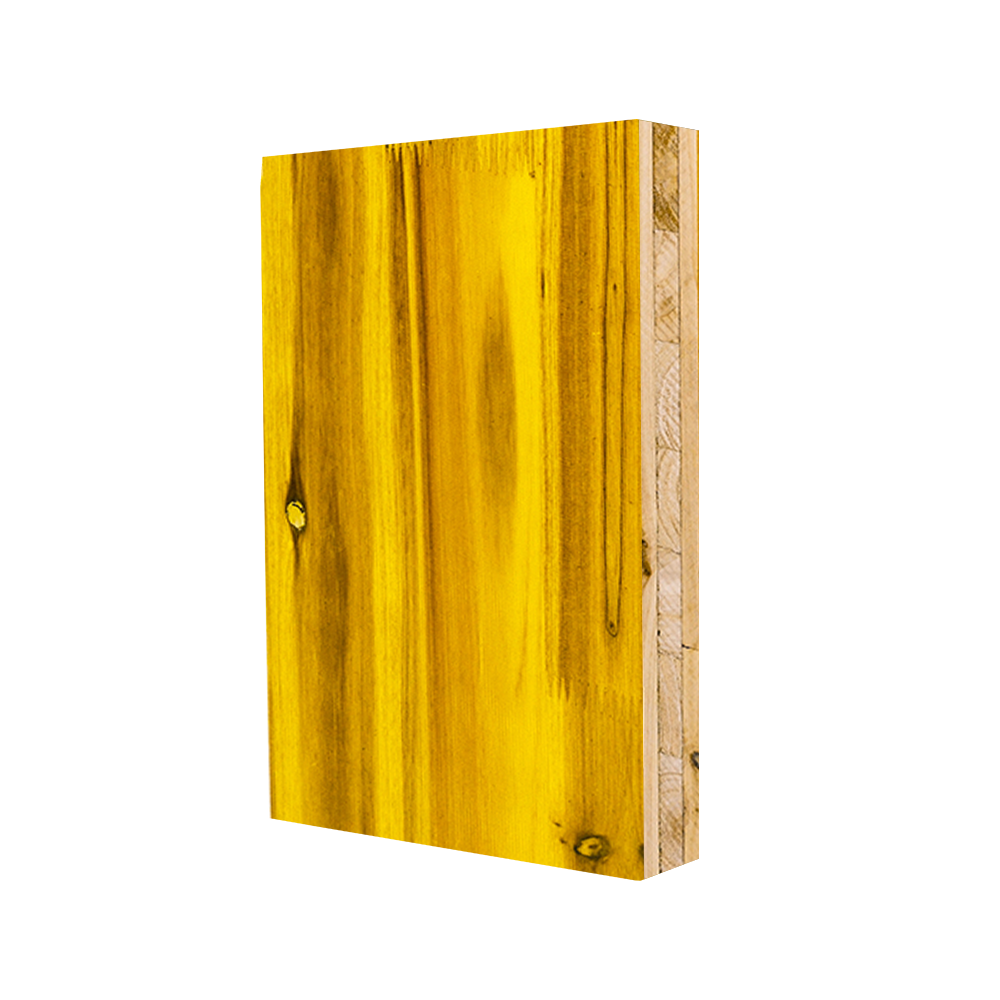
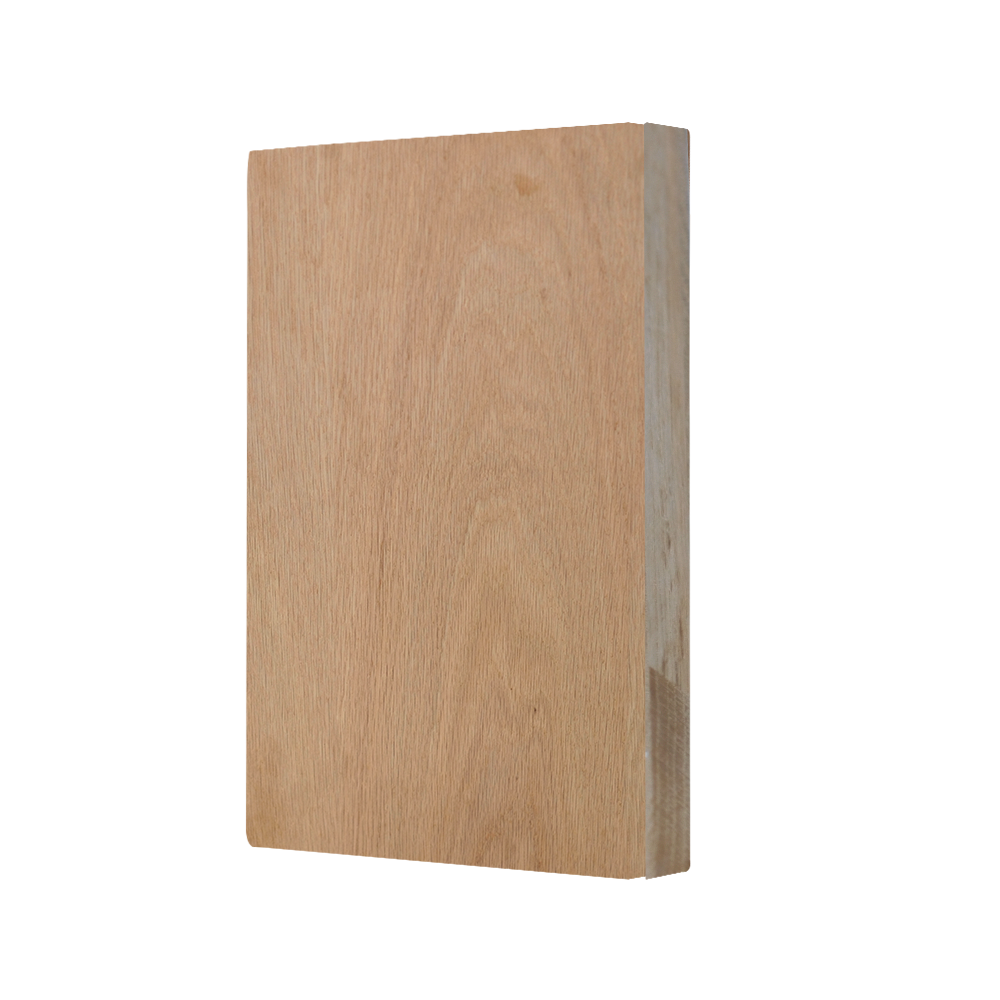
The simplest way to understand what is the difference between plywood and veneer is to look at the panel edge. A plywood edge shows a stack of thin lines, each one a separate ply. A veneer, by contrast, is so thin that on its own it would curl, crack and tear if you tried to use it as a board. The two materials are not competitors. One is a building block, and the other is a finishing layer.
Every ply in plywood is itself a form of veneer, because it is a thin sheet of wood peeled from a log. The distinction in everyday language comes from purpose. Plies inside the panel are called core veneers and are chosen for strength, uniform thickness and cost efficiency. The outermost sheet on a decorative panel is called a face veneer and is chosen for appearance, grain figure and colour consistency. Understanding this overlap clears up much of the confusion around the question of what is the difference between plywood and veneer.
| Attribute | Plywood | Veneer |
|---|---|---|
| Form | Rigid multi-layer sheet | Thin flexible wood sheet |
| Primary purpose | Structure, stability, fastening | Surface appearance and protection |
| Grain arrangement | Alternating at 90 degrees, layer by layer | One continuous grain direction per leaf |
| Can be used alone | Yes, as a panel | No, it needs a substrate |
| Screw holding | Good, especially in the face and edge | None on its own |
| Typical thickness | 3 mm to 40 mm | 0.3 mm to 3 mm, decorative leaves mostly under 1 mm |
| Response to moisture | Small movement in the panel plane | Moves with the substrate it is bonded to |
| Repair approach | Fill, patch, re-edge | Patch with matching leaf or replace the face |
When people ask is veneered wood real wood, they usually fear that the surface is a printed picture of timber. That fear is reasonable, because the panel market includes several surface technologies that look similar from a distance. Real veneer is cut from a log, so it contains the natural irregularities of timber: pores, medullary rays, mineral streaks and subtle colour shifts. A printed film repeats the same pattern at regular intervals and has no depth.
The answer to is veneered wood real wood therefore depends on what sits on the surface. If it is a sliced or peeled leaf of timber, the answer is yes. If it is a paper or plastic sheet printed with a wood image, the answer is no. A responsible manufacturer states the face species, the cutting method and the face thickness on the specification sheet, so the question never has to be guessed.
Move your eye across several sheets. Real veneer never repeats exactly. Printed surfaces show the same knot or swirl again and again.
On an unbanded edge, real veneer shows a fine tan or brown line sitting on top of the core. A printed film appears as a thin plastic skin with a flat colour.
Run a fingernail across the surface. Open-pore wood has tiny grooves that follow the grain. Printed surfaces are either smooth or carry an embossed texture that does not line up with the pattern.
Many panels carry a balancing veneer on the back. If the back also shows a real wood leaf, even a plainer one, the panel was built as a proper veneered construction.
| Surface type | Is it real wood? | Visible characteristics |
|---|---|---|
| Sliced veneer | Yes | Natural variation, open pores, can be sanded and refinished |
| Rotary-cut veneer | Yes | Wide, flowing cathedral grain, common on birch faces |
| Solid wood board | Yes | Full thickness timber, may cup or move across the width |
| Printed paper or film | No | Repeating pattern, uniform colour, cannot be sanded deeply |
| High-pressure decorative laminate | No | Hard plastic feel, pattern printed under a clear layer |
The cutting method influences everything a customer sees on Veneered Birch Plywood: grain pattern, sheet width, colour uniformity and cost. Each method treats the log differently, and each produces a recognisable look. Knowing these methods helps explain why two panels with the same species can look completely different.
The log turns against a long blade, much like unrolling a roll of paper towel. This produces wide continuous sheets with a bold, flame-like cathedral pattern. It is the most efficient method and is widely used for birch faces and for the inner plies of plywood.
A half log is pressed against a blade that moves up and down. The cut runs through the growth rings and creates a cathedral figure with a more orderly, repeatable layout than rotary cutting. It is a favourite for furniture doors and wall panels.
The log is quartered and the blade cuts across the growth rings at an angle, which produces a straight, even stripe. Species with prominent rays, such as oak, reveal a flake effect. Narrow leaves are common, so panels are assembled from several strips.
The blade follows the radius of the log at a slight angle, which creates a tight, linear grain with very little cathedral figure. It is chosen when a calm, architectural surface is needed, such as continuous wall cladding or minimalist cabinet fronts.
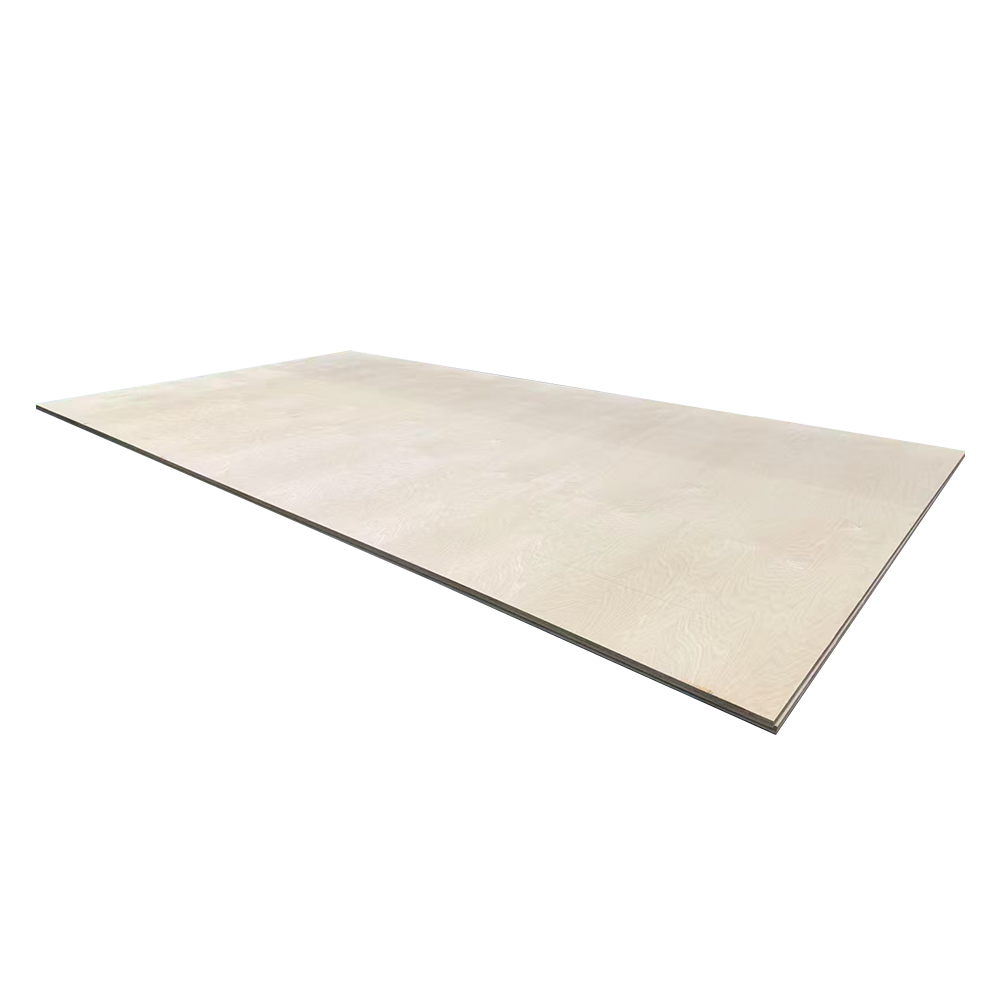
Birch is a fine-textured hardwood with a pale, creamy colour and a tight, even grain. Those qualities explain why Veneered Birch Plywood is so common in contemporary interiors. The wood peels cleanly into thin, uniform plies, takes glue evenly and sands to a smooth surface that accepts clear finishes without heavy colouring. A birch core also has a pleasing edge appearance, since the many thin plies form a layered line that designers often leave exposed.
Typical density for birch plywood sits around 640 to 700 kg per cubic metre, which places it in the medium-heavy range among panel materials. That density contributes to screw holding and to the clean routing behaviour that CNC machine operators appreciate. Because the plies are thin and uniform, there are few voids in the core, so cut edges look consistent from the first sheet to the last.
| Property | Veneered Birch Plywood reference value |
|---|---|
| Face species | Birch, or a chosen decorative species such as oak, walnut, ash or maple |
| Core construction | All-birch plies, or birch and poplar combination |
| Typical density | 640 to 700 kg/m3 for an all-birch core |
| Standard sheet sizes | 1220 x 2440 mm, 1250 x 2500 mm, 1525 x 3050 mm |
| Thickness range | 3 mm to 40 mm, most often 6, 9, 12, 15, 18 and 25 mm |
| Moisture content at shipment | 6% to 12% |
| Typical glue types | Moisture-resistant interior, or boil-resistant exterior bond |
| Surface condition | Sanded face, ready for lacquer, oil or stain |
Thickness selection is one of the first decisions in any project. The table below links common thicknesses to the number of plies and to the weight of a full 1220 x 2440 mm sheet, calculated at a density of 680 kg per cubic metre. Weight matters for handling, for hardware selection and for shipping, so it is worth reading these figures before drawing up a cutting list.
| Nominal thickness | Typical ply count | Common use |
|---|---|---|
| 6 mm | 5 plies | Cabinet backs, drawer bottoms, curved lamination |
| 9 mm | 7 plies | Light partitions, internal panels, speaker enclosures |
| 12 mm | 9 plies | Drawer sides, small shelves, display fittings |
| 15 mm | 11 plies | Wardrobe carcasses, wall units |
| 18 mm | 13 plies | Kitchen cabinets, bookcases, furniture frames |
| 25 mm | 17 to 19 plies | Workbench tops, heavy shelving, structural joinery |
When a panel gets thicker, its weight rises in direct proportion, but its resistance to bending rises much faster. In simple beam theory, bending stiffness grows with the cube of thickness. A shelf made from 18 mm Veneered Birch Plywood is therefore around 27 times stiffer than the same shelf made from 6 mm panel, while it weighs only three times as much. The line chart below plots both indices against thickness, using 6 mm as the starting reference of 1.0.
Values are theoretical indices based on thickness cubed for stiffness and thickness for weight. Real panels vary with species, glue line and ply layout.
This relationship explains a common design rule. When a long shelf sags, the cheapest fix is not a heavier-looking edge but a modest increase in thickness, or a rail along the front edge. A move from 15 mm to 18 mm lifts stiffness by roughly 70 percent while adding only 20 percent to weight.
Face grading describes how clean and uniform the visible veneer is. Grades differ between producers, but the logic is similar everywhere: the highest grade shows an unbroken, evenly coloured face, while lower grades allow sound knots, small repairs and colour variation. Matching the grade to the application avoids paying for perfection on a surface that will be hidden inside a cabinet.
| Grade | Surface description | Suitable placement |
|---|---|---|
| Grade A | Clean, uniform colour, no knots, tight seams | Visible doors, furniture fronts, wall feature panels |
| Grade B | Small sound pin knots, minor colour variation, a few neat patches | Visible carcass sides, shelving, display units |
| Grade BB | Open knots filled or patched, moderate colour variation | Painted surfaces, semi-visible components |
| Grade C | Knots, splits and patches permitted, structural soundness maintained | Hidden areas, backs, substrates for further covering |
Matching refers to the way separate veneer leaves are arranged on a panel. Even when the species is the same, the layout changes the character of the finished surface, so it should be specified rather than left to chance.
Alternate leaves are flipped like the pages of an open book, producing a mirrored grain along the joint. It creates a symmetrical, formal appearance that suits boardroom tables and entrance doors.
Leaves are laid side by side in the order they were cut, without flipping. The grain repeats in the same direction, which gives a calm, consistent stripe across large wall surfaces.
Leaves from different parts of the log are combined without regard to sequence. The result is a lively, rustic look that suits informal furniture and casual retail interiors.
Leaves are kept in cutting order across multiple panels, so adjacent panels continue the same grain flow. It is the preferred approach for long runs of wall cladding and matching cabinet doors in one room.
The core determines how a panel behaves under load, how it holds a screw and how it looks along the edge. Anyone investigating is veneered wood real wood should also ask about the core, because the veneer only tells half the story. The same birch face can sit on very different substrates, and each substrate changes performance.
| Core type | Strength | Weight | Edge appearance | Best fit |
|---|---|---|---|---|
| All-birch plywood | High | Medium-heavy | Fine, even layers | Exposed edges, high-load joinery |
| Birch and poplar plywood | Medium-high | Medium | Visible shade change between plies | General cabinet making |
| Poplar plywood | Medium | Light | Pale, soft look | Wall panels, weight-sensitive projects |
| Eucalyptus plywood | High | Heavy | Dense, tight layers | Floors, structural uses |
| MDF core | Medium | Heavy | Uniform, banded edge needed | Painted or routed profiles |
| Particleboard core | Lower | Medium | Banded edge required | Budget flat furniture |
An all-birch plywood core is the strongest choice when the panel will carry hinges, drawer runners or heavy shelves. The dense, uniform plies grip fasteners across the full thickness. A fibre core can look flawless under paint, but it does not hold fasteners as well in repeated assembly, and it tends to swell if the edge is not sealed.
The adhesive between the plies is as important as the wood itself. A weak bond line leads to delamination at the edge or blistering on the face. Interior panels commonly use moisture-resistant bonds, while panels destined for humid spaces or sheltered outdoor use are pressed with boil-resistant adhesive systems that withstand repeated wetting and drying.
Formaldehyde emission is the other side of glue selection. For plywood sold into European markets, the E1 class limits chamber emission to 0.124 mg per cubic metre of air under the EN 717-1 test. For hardwood plywood with a veneer core sold into North American markets, the CARB Phase 2 and TSCA Title VI limit is 0.05 parts per million. Factories serving several regions often press to the stricter level on a single production line, which simplifies documentation.
Resists occasional humidity, suitable for bedroom wardrobes, living room cabinets and office furniture where the panel stays dry.
Tolerates kitchens, bathrooms and damp storage, and is the usual choice for vanity units and under-sink cabinets.
Survives soaking and drying cycles, so it suits covered terraces, boat interiors and humid commercial spaces.
Wood swells and shrinks as it takes up or loses moisture, and it does so mostly across the grain. A solid birch board can change its width noticeably between a dry winter and a humid summer. Veneered Birch Plywood behaves differently. Because the plies are laid at right angles, each layer restrains the swelling of its neighbours, and the movement in the plane of the panel stays small. The chart below shows approximate linear change for every 1 percent change in moisture content.
Figures are approximate engineering references and vary by species, density and panel construction.
This stability is the reason plywood-based panels are trusted for large door skins, long wall panels and tabletops. A face veneer glued to a plywood core inherits that calm behaviour. A face veneer glued to solid wood would not, because the substrate would try to move while the thin leaf stayed locked in place, and the surface would eventually crack.
The question of what is the difference between plywood and veneer often leads to a second question: which substrate should carry the veneer? The comparison below places the three most common choices side by side.
| Criterion | Veneered plywood | Veneered MDF | Veneered particleboard |
|---|---|---|---|
| Screw holding in the edge | Strong | Fair | Fair to weak |
| Weight for the same thickness | Medium | Heavy | Medium |
| Surface flatness | Very good after sanding | Excellent | Good |
| Response to moisture | Moderate tolerance | Swells quickly at the edge | Swells and crumbles |
| CNC profile quality | Clean, layered edge | Smooth, uniform edge | Rougher edge |
| Impact resistance | High | Medium | Lower |
| Suitable for exposed edge | Yes, attractive layered look | No, needs banding | No, needs banding |
Every sheet of Veneered Birch Plywood passes through a sequence of controlled steps. Following that sequence shows why consistent production matters more than any single specification line. A defect introduced at the peeling stage will appear at the press, and a poorly dried ply will show up as telegraphing or warping weeks after installation.
Straight birch logs of suitable diameter are sorted by defects and cut to length.
Logs are softened with heat and rotated against a blade to produce continuous sheets.
Plies are dried to a controlled moisture level so the glue bonds evenly.
Plies are graded by visual quality, and defects are patched or removed.
Adhesive is applied by roller at a measured spread rate.
Plies are stacked with alternating grain and pressed under heat and pressure.
The core is calibrated, and the decorative face veneer is bonded on.
Panels are cut to size, checked and sorted before packing.
Quality control in a panel factory is built around measurable checkpoints. The table below lists the main inspection items and the typical tolerance bands used for decorative plywood. Exact limits depend on the standard and on the agreement made for each project.
| Inspection item | Typical tolerance or requirement |
|---|---|
| Thickness after sanding | Within about plus or minus 0.3 mm to 0.5 mm depending on nominal thickness |
| Length and width after trimming | Within about plus or minus 1 mm to 2 mm |
| Squareness | No more than about 1 mm per metre of diagonal difference |
| Edge straightness | No more than about 1 mm per metre |
| Moisture content | 6% to 12% at packing |
| Bond strength | Tested by soaking and shearing sample pieces |
| Face defects | Checked against the agreed grade, including patches, splits and colour variation |
| Core gaps | No open voids that weaken edge strength or show after routing |
Veneered Birch Plywood machines cleanly when the tooling is sharp and the settings are right. The thin face veneer is the weak point, because a dull blade tears the surface fibres as it exits the cut. Good results come from a few consistent habits.
Use a fine-tooth carbide blade with a high tooth count for table saw and panel saw cuts. More teeth mean smaller bites and a cleaner face.
Tear-out happens where the blade leaves the material. A scoring blade, a zero-clearance insert or masking tape along the cut line keeps the face veneer intact.
Spiral bits with a compression geometry press the face and back fibres toward the core, producing a crisp edge on both sides of the panel.
Edges can be banded with matching veneer tape for a seamless look, or left exposed, sanded and sealed to display the layered birch pattern.
When drilling for hinges or fittings, a brad-point bit reduces wandering on the slick surface. Pre-drilling pilot holes close to the edge prevents splitting, and a countersink keeps the screw head below the face. Because a veneer face is thin, sanding should be done lightly with fine grit and a sanding block, working with the grain rather than across it.
Birch is a close-grained species that accepts many finishes, though it also has a tendency to show blotches under certain stains. Choosing a finish early helps the project look consistent across all panels, doors and edges.
| Finish | Appearance | Durability | Note for birch |
|---|---|---|---|
| Water-based clear lacquer | Light, natural, slightly cool tone | Good for furniture and cabinets | Keeps the pale colour of birch |
| Oil-based clear varnish | Warmer, amber tone | Very good for tabletops | Colour deepens over time |
| Hardwax oil | Soft, matte, natural feel | Good, easy to spot repair | Highlights the grain without a film |
| Pigmented stain with sealer | Darker tone, even colour | Depends on the topcoat | Use a pre-conditioner to prevent blotching |
| Opaque paint | Solid colour | Very good | Fill grain first for a smooth result |
The strength of the plywood core and the beauty of the real-wood veneer make this panel useful across a wide range of settings. Each application draws on a different part of its character.
The core holds hinges and drawer runners firmly through years of daily use, and a sealed face resists the light splashes common in kitchens.
Large panels stay flat across tall door heights, and the pale birch surface suits both modern and Scandinavian interiors.
Sequence-matched veneer creates a continuous grain across a long wall, while the light weight of a 9 mm or 12 mm sheet keeps fixing simple.
CNC-cut shelves, plinths and counters hold their shape under repeated loading, and the exposed edge becomes a recognisable design detail.
Restaurant booths, bar fronts and reception desks benefit from the warm natural appearance and from finishes that stand up to constant cleaning.
The dense, uniform core resists unwanted panel vibration, which is why birch plywood is a long-standing choice for speaker enclosures.
Veneer is a way of using timber more efficiently. A single log can be sliced into hundreds of leaves, which means rare or highly figured species can cover far more surface area than they would as solid boards. The material is real, and the visual quality can exceed that of ordinary solid planks.
Construction grades exist, but cabinet-grade plywood is made with carefully selected plies, tight tolerances and sanded faces. Birch plywood is a refined material used in furniture design around the world.
A thicker face leaf allows more sanding and refinishing, but it also costs more and can be harder to bond flat. For most indoor panels, a sliced face of 0.5 mm or less performs well when the core is stable and the glue line is sound.
A veneered surface can be lightly sanded and recoated several times. The key is restraint. Fine abrasives and light pressure refresh the finish without cutting through the thin leaf.
Real-wood surfaces reward gentle care. A damp, soft cloth removes everyday dust and fingerprints, and a mild soap solution handles stubborn marks. Harsh solvents, abrasive pads and excessive water should be avoided, because they can dull the finish or lift the thin leaf at an unsealed edge.
Light changes colour over time. Birch tends to warm slightly toward honey, and darker species such as walnut may lighten under strong sunlight. Positioning panels away from long periods of direct sun, and rotating loose items occasionally, helps the surface age evenly. For hardwax oil finishes, a light refresh coat every year or two restores the sheen without any need to strip the surface.
Panels are heavy, flat and sensitive to edge damage, so packing is part of the product. Sheets are stacked on pallets with protective boards on the top and bottom, then strapped with steel or polyester bands. Corner guards protect the edges, and a moisture barrier wrap keeps humidity away during ocean transit. Each pack carries labels showing species, grade, thickness, size and quantity, which makes inspection at the destination quick.
| Packing item | Standard practice |
|---|---|
| Pallet base | Solid wood or plywood pallet sized to the sheet |
| Top and bottom covers | Plywood or hardboard sheets to protect faces |
| Strapping | Steel or polyester bands with edge protectors |
| Moisture protection | Plastic wrap and, when needed, a desiccant layer |
| 20-foot container load | Roughly 20 to 22 cubic metres of palletised panels |
| 40-foot high-cube load | Roughly 50 to 56 cubic metres of palletised panels |
| Labelling | Species, grade, size, thickness, quantity, batch number |
Loading figures are planning references. Actual quantities depend on sheet size, thickness, pallet height and the weight limit of the container, so a loading plan is confirmed before production starts.
A factory that controls peeling, pressing and lamination under one roof can adjust the panel to the needs of a specific design. The list below shows the parameters that can usually be set at the start of a project.
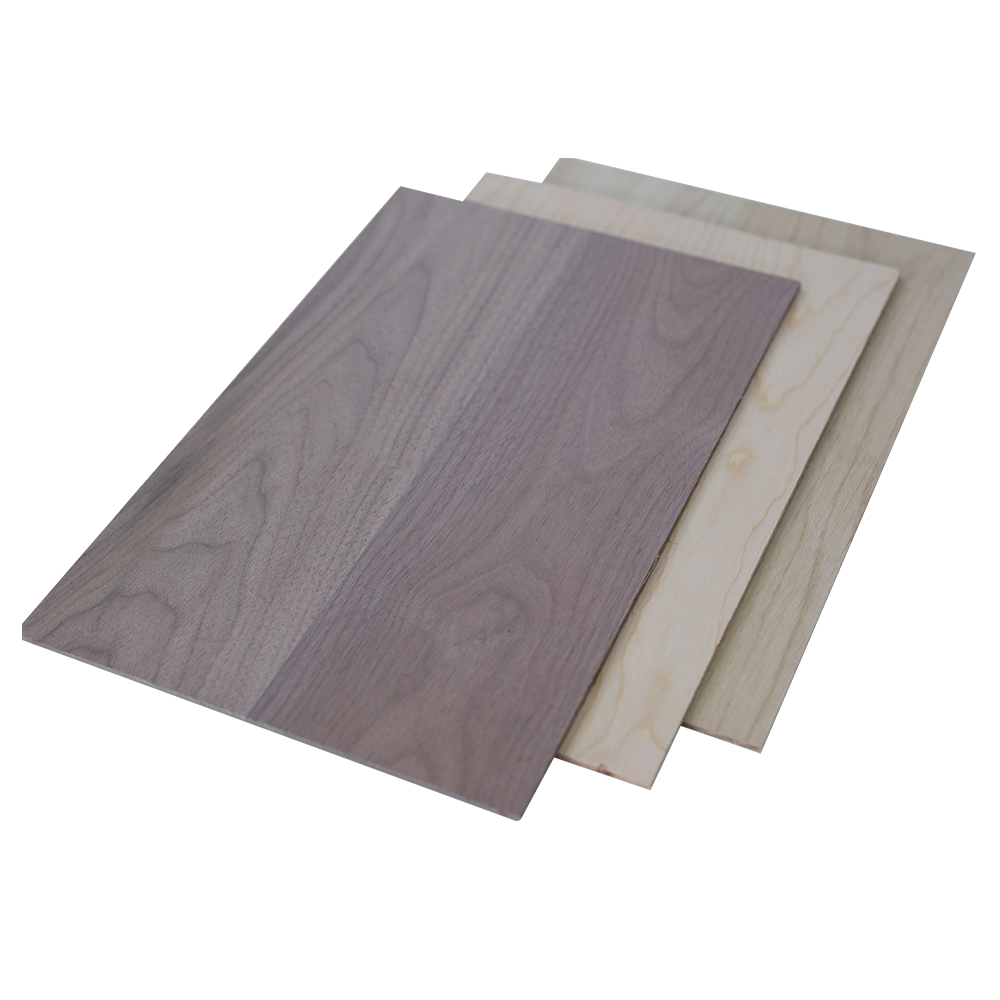
Birch, oak, walnut, ash, maple, beech and other species, chosen for colour and grain figure.
Standard sheets or cut-to-size panels to reduce on-site waste.
From 3 mm to 40 mm, with matched ply counts for balanced strength.
Sanded raw faces, pre-sealed faces or fully pre-finished with clear coating.
Matching face grade, a lower balancing grade or a different species for cost control.
Raw, sealed, painted or banded with matching veneer tape.
Interior, moisture-resistant or boil-resistant bonds, pressed to the emission class required by the destination market.
CNC cutting, grooving, drilling and labelled kits for faster assembly.
A clear specification speeds up sampling and avoids misunderstandings later. The table below lists the points that a technical team needs to prepare an accurate proposal.
| Item to confirm | Why it matters |
|---|---|
| Intended use and location | Determines the glue type, the core and the finishing system |
| Face species and cutting method | Sets the appearance and the matching approach |
| Face and back grades | Controls how clean the visible and hidden surfaces will be |
| Thickness and sheet size | Defines the ply count, weight and cutting efficiency |
| Emission class | Ensures the panel meets the rules of the destination market |
| Finish requirement | Decides whether panels ship raw, sealed or pre-finished |
| Quantity and delivery schedule | Allows production planning and container loading |
| Drawings for machined parts | Allows accurate CNC programming and nesting |
Plywood is a full panel made from several glued layers of wood, and veneer is one thin layer of wood used for the surface. Plywood supplies strength, and veneer supplies appearance.
Yes. The veneer layer is cut directly from a log, so it contains genuine wood fibres and natural grain. When the core is plywood, the whole panel is composed of wood layers joined with adhesive.
Yes. An 18 mm all-birch core holds hinges, runners and shelf supports reliably, and it keeps its shape across wide panels. Shelf spans between 600 mm and 800 mm are common design practice for loaded bookcases at that thickness.
It can, provided the glue line is moisture-resistant, all edges are sealed and the face carries a water-resistant finish. Panels should not sit in standing water.
Sliced decorative veneer is usually between 0.3 mm and 0.6 mm thick. Rotary-cut birch faces can be slightly thicker, depending on the production line.
Yes, with care. Use fine abrasives, light pressure and a sanding block. Sanding through the thin face exposes the core layer and cannot be repaired invisibly.
Plywood suits exposed edges, repeated assembly and higher loads. MDF suits painted, routed or very flat surfaces where an edge will be banded. The choice depends on how the part will be used.
Face species, grade, thickness, sheet size, emission class and the intended application are the main points. With those details, the technical team can prepare a sample set and a data sheet that matches the project.
Share the face species, thickness, sheet size and application, and the factory team will prepare matching samples, grade references and specification details for your project.
related products


Copyright © Tianma Lvjian Group Co., Ltd. Rights Reserved.
Wholesale Construction Plywood Manufacturers Privacy
 English
 中文简体